

How Processed Foods Override Your Hunger Hormones
In an NIH trial, people ate 500 extra calories a day on ultra-processed foods — same protein, carbs, and fat as the whole-food group. They just couldn't stop. Here's why.
- The Hidden Calorie Trap: Why You Can't Trust Your Appetite with Ultra-Processed Foods
- How Hunger Hormones Get Hijacked by Ultra-Processed Foods
- The Childhood Crisis: Why Kids Are Eating 64.8% Processed Calories
- The Real-World Consequences: Obesity, Disparities, and a $173 Billion Burden
- How to Outsmart Ultra-Processed Foods: Practical Strategies for Restoring Satiety
- The Bigger Picture: Why This Is a Systems Problem (and What Can Be Done)
- Takeaway: Break the Cycle, One Meal at a Time
- Sources
How to Stop Ultra-Processed Foods From Hijacking Your Hunger
In a controlled trial at the National Institutes of Health, people ate five hundred more calories a day on ultra-processed food — same protein, same carbs, same fat as the whole-food group. Same calories on the label. They just couldn't stop. The reason is hormonal, and once you see it, the modern food environment looks very different.
how-to-stop-ultra-processed-foods-hijacking-hunger
health, nutrition, weight loss, appetite regulation, ultra-processed foods
The Hidden Calorie Trap: Why You Can't Trust Your Appetite with Ultra-Processed Foods
Key Takeaways
- Ultra-processed foods (UPFs) — NOVA category 4, meaning industrially formulated products like sugary cereals, frozen dinners, and packaged snacks — make up 55% of the average U.S. adult's daily calories.
- In a controlled NIH study, people on a UPF diet ate roughly 500 extra calories per day compared with a minimally processed diet, despite identical macronutrients.
- The extra eating isn't a willpower problem. UPFs blunt the hormones that signal fullness — ghrelin, leptin, GLP-1, CCK, and PYY.
- Swapping one UPF meal a day for a whole-food alternative can begin to restore those signals within about a week.
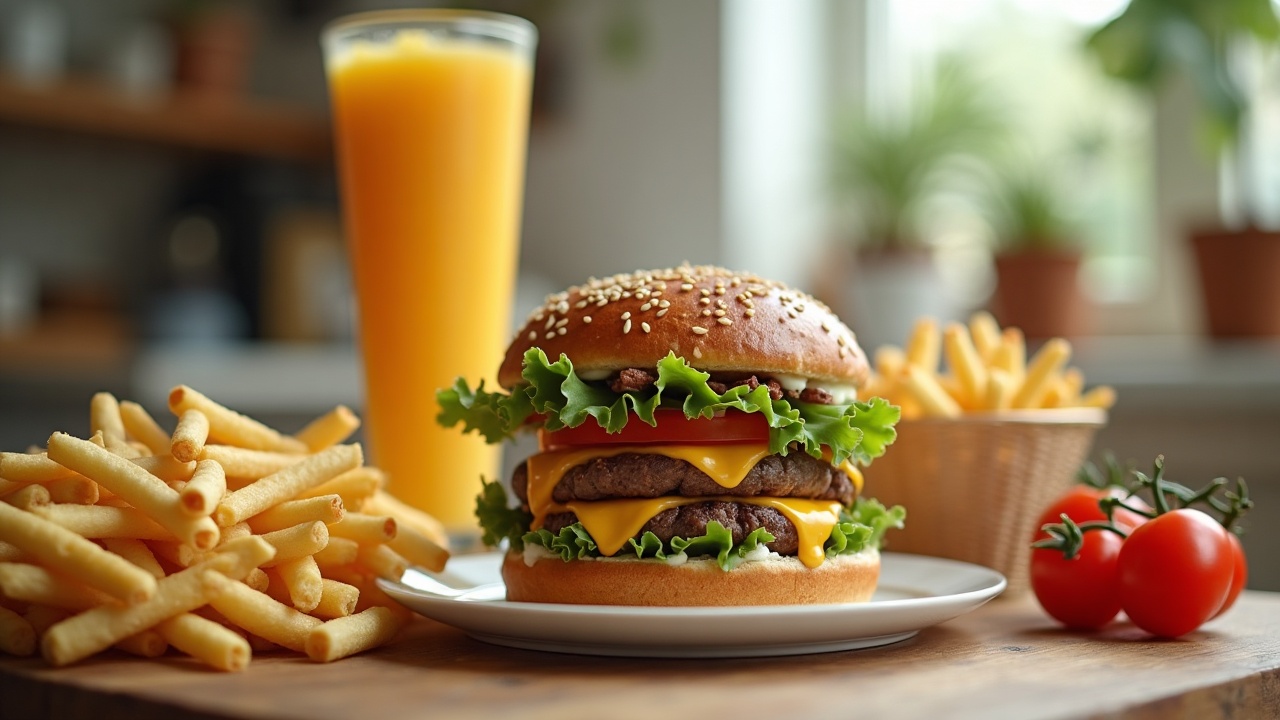
The average U.S. adult now gets 55% of daily calories from ultra-processed foods like sugary cereals, frozen meals, and soda, according to the CDC's NCHS Data Brief 536. Ultra-processed (UPF) is a specific term. It refers to NOVA category 4 foods — the industrial formulations made from refined ingredients and additives you wouldn't find in a home kitchen. Cheese, canned beans, and frozen broccoli are processed, but they aren't UPF.
The distinction matters, because UPFs do something other processed foods don't: they quietly override the body's appetite controls. In a 2019 NIH-funded trial published in Cell Metabolism30248-7), researchers fed participants two diets for two weeks each — one ultra-processed, one minimally processed — with identical calories, carbs, protein, fat, and fiber. People ate roughly 500 more calories per day on the UPF diet and gained about two pounds. That's not a willpower failure. It's a hormone failure.
How Hunger Hormones Get Hijacked by Ultra-Processed Foods
Five hormones run your appetite, and they work like a relay team. Ghrelin starts the race — the empty-stomach signal that says feed me. Leptin, made by your fat cells, sets the long-term thermostat. After you eat, two gut hormones — GLP-1 and PYY — pass the baton to your brain and say put the fork down. CCK runs the anchor leg, slowing digestion when fat and protein reach your small intestine. In a healthy meal, these signals fire in sequence and you naturally stop. UPFs derail almost every step.
Ghrelin and leptin lose the plot
The high-sugar, high-fat, high-sodium combination in UPFs creates what researchers call hedonic override — the brain's reward system drowns out the homeostatic system that tracks hunger, per a 2025 review of food reward neurobiology in PubMed. Ghrelin stays elevated longer. The leptin response gets blunted with repeated exposure.
GLP-1 barely shows up
GLP-1 normally surges in response to protein, fat, and fiber. UPFs are typically low-fiber, rapidly digested, and engineered for soft texture, so the GLP-1 release is muted. Imperial College research on food structure found that the physical food matrix — how solid and intact a food is — directly shapes which gut hormones get released. Plant-based meals produce roughly 23% higher GLP-1 release than processed-meat meals, per a 2018 trial in The American Journal of Clinical Nutrition.
CCK and PYY barely register
Both CCK and PYY rely on chewing and stomach stretch. Soft, calorie-dense UPFs let you ingest a 700-calorie meal before either hormone has time to react. The result, reported in Diabetes, Obesity and Metabolism, is meaningfully higher energy intake before satiety registers.
The Childhood Crisis: Why Kids Are Eating 64.8% Processed Calories
Children aged 6-11 get 64.8% of their calories from UPFs — nearly 12 percentage points higher than adults, per CDC NCHS Data Brief 536. Two factors compound the risk. Kids' appetite regulation is still developing, which makes their hormonal feedback loops more vulnerable to disruption. And U.S. food companies spend roughly $14 billion a year marketing food and beverages — much of it UPF — to children, per the Trust for America's Health 2024 State of Obesity report.
The downstream pattern shows up in adult obesity prevalence: 49.9% among non-Hispanic Black adults and 45.6% among Hispanic adults — communities historically targeted by heavier fast-food marketing, according to CDC NCHS Data Brief 508.
The Real-World Consequences: Obesity, Disparities, and a $173 Billion Burden
Obesity-related medical costs in the U.S. run about $173 billion per year (in 2019 dollars), per the CDC. Obesity now affects 40.3% of U.S. adults, with severe obesity at 9.4% — up from 3.5% in the early 1960s, per CDC NCHS Data Brief 508.
The connection back to hunger hormones is direct. Sustained UPF exposure doesn't just add calories one meal at a time. Animal and observational human studies suggest that over months and years, the post-meal GLP-1 response gets dampened and leptin sensitivity drops — so the "stop eating" signal grows weaker even on days you eat whole foods. That helps explain why weight loss is so hard to sustain. The food environment isn't just supplying extra calories; it's nudging the thermostat that normally turns appetite off.
How to Outsmart Ultra-Processed Foods: Practical Strategies for Restoring Satiety
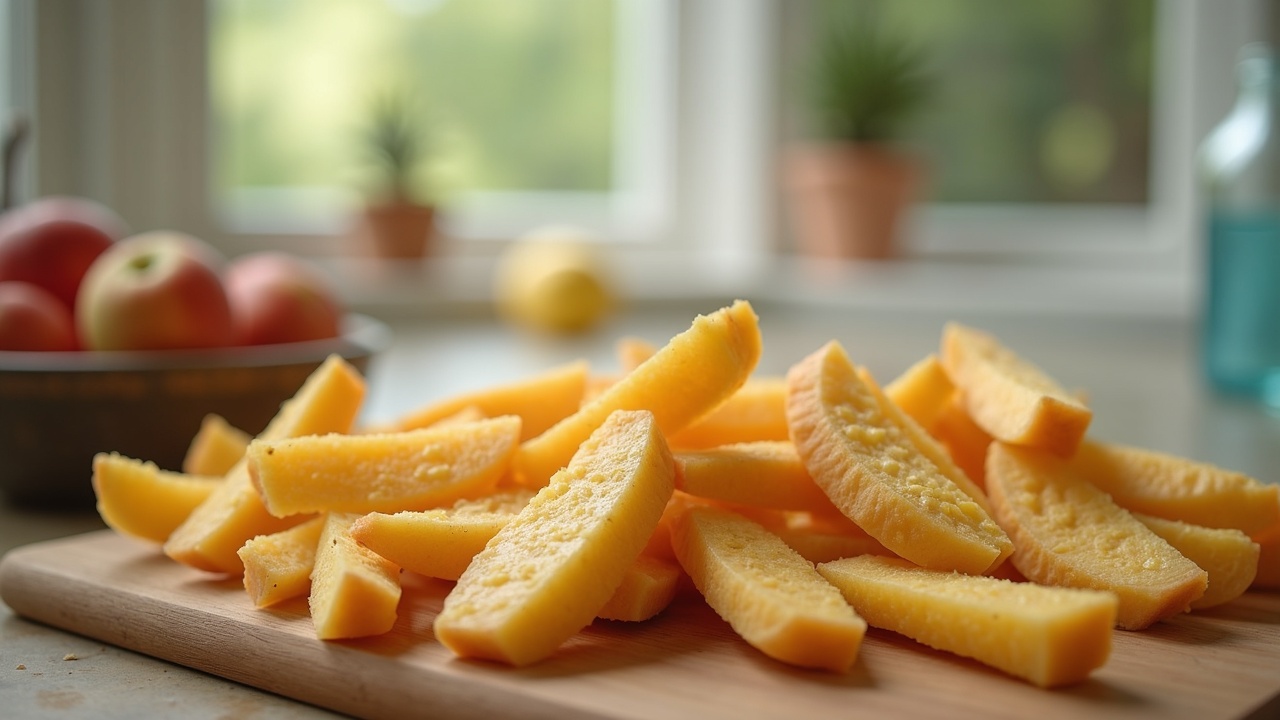
Hunger hormones are surprisingly responsive. Within a week or two of cutting back UPFs, GLP-1 and PYY responses tend to normalize and meals start to feel filling again. Three changes do most of the work.
1. Swap one UPF meal a day for a whole-food alternative
Frozen dinner becomes a sheet pan of roasted vegetables and beans. Sugary cereal becomes plain yogurt with fruit. You don't have to overhaul everything at once — satiety signaling begins to recover after a few days of even partial reduction, per Diabetes, Obesity and Metabolism.
2. Slow down at the table
Food structure and chewing time matter for CCK and PYY release. You don't need to count chews. Just notice when you're inhaling a meal — putting the fork down between bites is the simplest correction, and it gives your gut hormones time to talk to your brain.
3. Lead with protein and fiber
Protein and fiber are the strongest natural GLP-1 and PYY triggers. Start the meal with the salad, the eggs, or the beans — not the bread. A protein-and-fiber-first pattern routinely outperforms calorie counting in trials of satiety and intake.
The Bigger Picture: Why This Is a Systems Problem (and What Can Be Done)
Personal swaps help, but UPF consumption is a systems problem — driven by price, availability, marketing, and policy. One encouraging signal: adult UPF intake has declined modestly from 56% (2017-2018) to 53% (2021-2023), per CDC NCHS Data Brief 536. Cities including New York have begun restricting sugary-drink advertising in public transit. None of this fixes the problem at home tonight. So pick one meal this week where you most often eat UPF — usually breakfast or a late snack — and swap it for whole food. That single change is what the trial evidence supports as the fastest way to feel your fullness signals come back.
Frequently Asked Questions
Do all processed foods override hunger hormones, or just ultra-processed ones?
The hormonal disruption is specific to ultra-processed foods (NOVA category 4) — industrially formulated products with refined ingredients and additives. Cheese, canned beans, and frozen vegetables are processed but generally don't show the same hedonic-override pattern in controlled trials.
Can I "balance" UPF consumption with exercise or supplements?
Exercise improves insulin sensitivity and cardiometabolic health, but it doesn't reverse the appetite dysregulation UPFs cause. Trials consistently show that cutting UPF intake produces larger satiety gains than adding exercise on top of an unchanged diet, per CDC NCHS Data Brief 508.
How do I transition to whole foods if my budget is limited?
Whole food doesn't have to mean expensive. Dried beans, lentils, eggs, oats, frozen vegetables, and in-season produce are typically cheaper per calorie than packaged UPFs. Cooking once and eating twice — a pot of chili or stew that covers three meals — does more for the grocery bill than any single ingredient swap.
Recommended reading: Limited
Why do UPFs feel so addictive compared to whole foods?
UPFs are engineered to hit the brain's reward circuits with sugar-fat combinations that don't occur in nature, while simultaneously dulling the satiety hormones that would normally tell you to stop, per a 2025 review of food reward neurobiology. That mismatch — wanting without satisfaction — is the loop that defines addictive eating patterns.
Takeaway: Break the Cycle, One Meal at a Time
Replace one ultra-processed meal a day with a whole-food alternative this week. That single change starts retraining the hormones — ghrelin, leptin, GLP-1, CCK, PYY — that food companies have spent decades teaching your body to ignore.
This article is informational and not a substitute for medical advice. Consult your healthcare provider before making significant dietary changes, especially if you have diabetes, a history of disordered eating, or other underlying conditions.
Data as of May 2026.
Sources
- CDC, NCHS Data Brief 536 — Ultra-Processed Food Consumption Among U.S. Adults and Youth: https://www.cdc.gov/nchs/products/databriefs/db536.htm
- CDC, NCHS Data Brief 508 — Obesity and Severe Obesity Prevalence in Adults: https://www.cdc.gov/nchs/products/databriefs/db508.htm
- CDC, Adult Obesity Facts (medical cost estimates): https://www.cdc.gov/obesity/adult-obesity-facts/index.html
- Hall et al., Cell Metabolism (2019), Ultra-Processed Diets Cause Excess Calorie Intake: https://www.cell.com/cell-metabolism/fulltext/S1550-4131(19)30248-7
- Imperial College London — Food structure and gut hormone release: https://www.imperial.ac.uk/news/265333/food-structure-plays-role-which-hormones/
- Diabetes, Obesity and Metabolism — UPF satiety research: https://dom-pubs.onlinelibrary.wiley.com/doi/10.1111/dom.15922
- The American Journal of Clinical Nutrition — Plant-based meals and GLP-1: https://www.ncbi.nlm.nih.gov/pmc/articles/PMC6357017/
- PubMed — Food reward neurobiology review: https://pubmed.ncbi.nlm.nih.gov/40388988/
- Trust for America's Health — State of Obesity 2024: https://www.tfah.org/report-details/state-of-obesity-2024/
Found an error? Let us know at [email protected] — we'll verify and correct it immediately.
The Canopy Brief
One financial insight. One career move. One tool worth knowing. Every Monday. 5 minutes. No fluff.
Free. No spam. Unsubscribe anytime.
Canopy Picks
Products we've vetted and recommend. We may earn a commission at no extra cost to you.
-
Optimum Nutrition Whey Protein
Gold standard whey — 24g protein per scoop, minimal fillers. -
Magnesium Glycinate
Doctor-recommended form for sleep quality and recovery. -
LectroFan White Noise Machine
Non-looping white noise for deeper, uninterrupted sleep. -
Why We Sleep by Matthew Walker
The science of sleep — and why it's your most important health tool.
Found an error? At Canopy Press, accuracy comes first. If you spot a claim that needs checking, let us know at [email protected] — we'll verify and correct it immediately.
Found an error? At Canopy Press, accuracy comes first. If you spot a claim that needs checking, let us know at [email protected] — we'll verify and correct it immediately.
Sources
- CDC NCHS Data Brief No. 536: Ultra-processed Food Consumption (August 2025)
- CDC NCHS Data Brief No. 508: Obesity Prevalence (September 2024)
- NIH: Study finds heavily processed foods cause overeating and weight gain
- Hall et al., Cell Metabolism: Ultra-Processed Diets Cause Excess Calorie Intake and Weight Gain (2019)
- Impact of ultra-processed foods on hedonic and homeostatic appetite regulation: systematic review (2025)
- Hamano et al., Diabetes, Obesity and Metabolism: UPF crossover RCT (2024)
- Imperial College London: Food structure plays key role in which gut hormones are released
- Plant-Based vs Processed-Meat Meal: GLP-1/PYY Crossover Study (PMC)
- TFAH State of Obesity Report 2025
Explore by topic