
Best Meal Planning App in 2026: Compared by Goal
Paprika costs $4.99 once and rates 4.9 stars on iOS — yet it's almost never ranked #1. The reason has nothing to do with the app, and everything to do with affiliate payouts.
The highest-rated meal planning app of 2026 costs four dollars and ninety-nine cents. One time. Not per month. Not per year. Once. So why is it almost never ranked number one in "best of" lists? The answer isn't about the app. It's about how affiliate marketing quietly shapes every recommendation you read online. Stick with us. By the end of this video, you'll know which meal planning app fits your goal. You'll also know which ones are just paying to be ranked first.
Quick Verdict: Paprika ($4.99 once) wins for cost-conscious organizers who already know what they want to cook. PlateJoy ($99/year) earns its price for goal-driven users who want AI to do the planning. AnyList ($14.99/year household) is the family pick — best shared grocery list in the category.
| App | Pricing | Best For | Rating | AI/Personalization | Family Sharing |
|---|---|---|---|---|---|
| Paprika | $4.99 once (mobile), $29.99 (desktop) | Recipe organizers, cost-conscious cooks | 4.9 ★ iOS / 4.7 ★ Android | None — manual | Limited (per device) |
| PlateJoy | $99/year (12-mo) or $69 (6-mo) | Goal-driven personalization, weight loss | 4.5 ★ | 50+ data points, Instacart sync | Profile-based |
| Eat This Much | $60/year ($5/mo annual) | Calorie/macro targeting | 4.4 ★ | Macro-driven AI | Limited |
| eMeals | $4.99/mo (12-mo) to $9.99/mo | Niche diets (keto, diabetic, heart-healthy) | 4.3 ★ | Plan templates | Yes |
| AnyList Complete | $9.99/yr individual / $14.99/yr household | Shared grocery lists | 4.8 ★ | Minimal | Best in class |
| Plan to Eat | $49/yr online or $54.99/yr via App Store | Recipe-to-grocery automation | 4.6 ★ | Rules-based | Household plans |
| Prepear Gold | $119.99/year | AI plans, premium feel | 4.6 ★ | AI-driven | Yes |
| Mealime Pro | $5.99/month | Solo cooks, fast 30-min recipes | 4.7 ★ | Preference-based | Limited |
| Foodie Prep | Free / $9 mo / $59 yr | Budget AI users | 4.2 ★ | Generative AI | Limited |
Sources: paprikaapp.com, platejoy.com, eatthismuch.com, emeals.com, anylist.com, plantoeat.com, foodieprep.ai, (Apple) (2026).
Recommended reading: Limited
Recommended reading: Best For
Here's the snapshot in spoken form. Paprika: four ninety-nine, one time, four-point-nine stars. PlateJoy: ninety-nine dollars a year, four-point-five stars, fifty-plus data points. Eat This Much: sixty dollars a year, four-point-four stars, macro-driven. eMeals: five to ten dollars a month, four-point-three stars, niche diets. AnyList Complete: fifteen dollars a year for the household, four-point-eight stars, best shared list. Plan to Eat: forty-nine a year, four-point-six stars, recipe automation. Prepear Gold: a hundred and twenty a year, four-point-six stars, premium AI. Mealime Pro: six dollars a month, four-point-seven stars, fast solo recipes. Foodie Prep: free or fifty-nine a year, four-point-two stars, budget AI.
The $4.99 App With 4.9 Stars: Why Paprika Isn't #1 in Most "Best Of" Lists
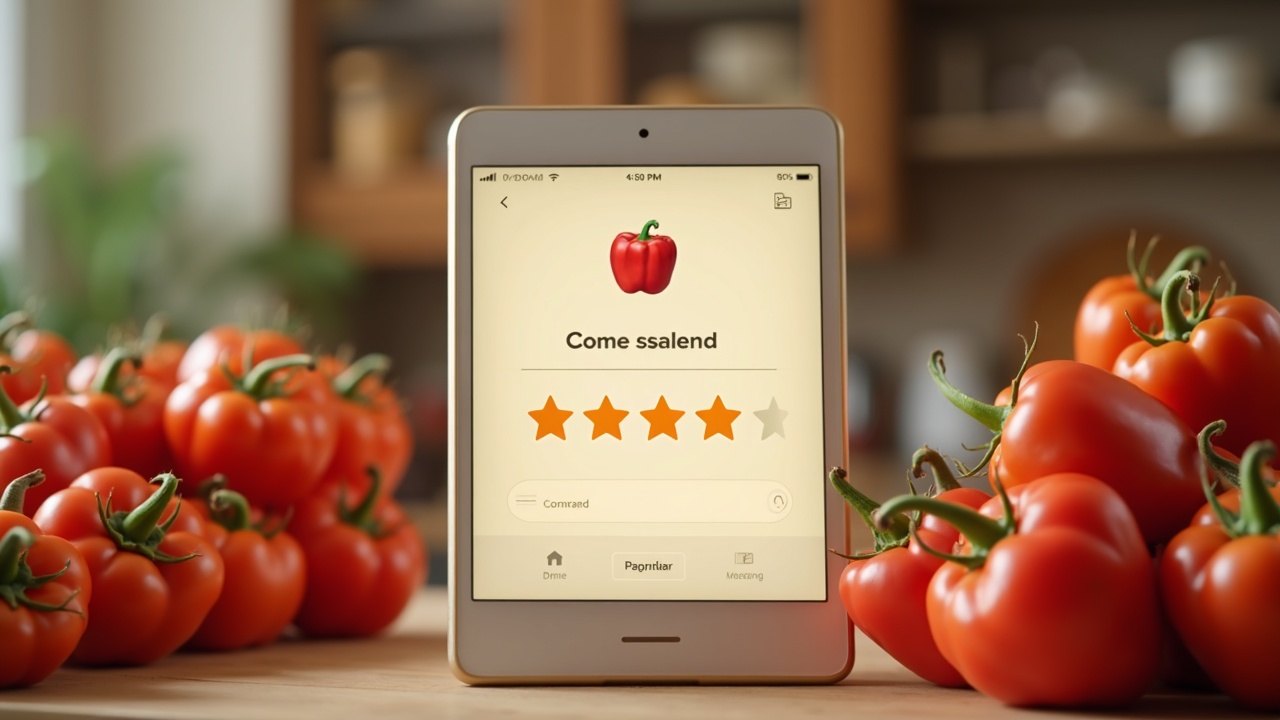
By user ratings alone, Paprika Recipe Manager beats every paid competitor. It holds 4.9 stars across 30,000-plus iOS reviews. It also holds 4.7 stars on Android (Apple App Store / Google Play, 2026). Those ratings are unmatched in the category. Its price is $4.99, once, on mobile. There is no subscription. There is no upsell. You buy it, and it works for years.
So why does it rarely top "best meal planning app" lists?
Affiliate economics. Subscription apps pay recurring commissions. One-time purchases pay once. A $119.99 annual subscription typically pays affiliates 20–40% on signup and renewals. A $4.99 one-time purchase pays a few cents at most. Disclosure: Canopy Press uses affiliate links too, including some on this page. The difference is we're telling you the cheapest app is also the highest-rated. If you ran a "best meal planning apps" site, which app would you rank first?
This is the structural distortion in the category. The 2026 Eat This Much roundup — itself a subscription app — does include Paprika. Most rankings bury it. Meanwhile, Prepear Gold at $119.99/year (Eat This Much, 2026) gets prime placement despite a smaller, less enthusiastic user base.
Over three years, a Paprika user pays four dollars and ninety-nine cents. A Prepear Gold subscriber pays three hundred and fifty-nine dollars and ninety-seven cents. That's a ninety-eight-point-six percent cost gap. For what? Two apps that, for the average cook, do roughly the same job. They organize recipes, build grocery lists, plan the week. So where does that extra three hundred and fifty-five dollars actually go? Mostly to marketing budgets that buy the rankings you read.
So is PlateJoy seven times better than Paprika? For most cooks, no.
The catch: Paprika charges separately per platform. Mobile is $4.99, desktop is $29.99 (paprikaapp.com). If you want it on your iPhone, iPad, and Mac, you'll pay $4.99 + $4.99 + $29.99 = $39.97. That's still less than five months of PlateJoy. And it's a one-time cost.
Paprika won't suit everyone. It has no AI. It has no automatic meal plans built around your macros. It has no Instacart integration. It assumes you bring the recipes. It organizes them, scales them, and builds your grocery list. For cooks who already know what they want to make, that's the point. For someone who wants an app to think for them, it isn't.
2026 Market Snapshot: AI, AR, and $2.71 Billion in Revenue
The meal planning app category is bigger than most people realize. The global market hit $2.45 billion in 2025 and is projected at $2.71 billion in 2026, growing at a 10.5% compound annual rate through 2034 (Business Research Insights / Verified Market Research, 2026).
The bigger story is AI. The AI-driven subset of meal planning apps grew from $0.83 billion in 2025 to $1.03 billion in 2026. That's a 28.1% compound annual growth rate, nearly three times the rate of the broader category (market.us AI Meal Planning report, 2026). Roughly 42% of leading meal planning apps now integrate AI, machine learning (ML), and augmented reality (AR)-supported cooking features (Business Research Insights, 2026).
This shift matters for buyers because it changes what you're paying for. A subscription in 2022 mostly bought you a curated recipe library and a grocery list builder. A subscription in 2026 buys you something different. The model adjusts your weekly plan based on a fitness tracker reading. It also reads glucose logs or a fifty-data-point intake survey (platejoy.com).
The broader nutrition-app market — the installation base meal planners are competing for — sits even larger. Statista projects nutrition app revenue at $6.05 billion in 2025 reaching $9.15 billion by 2029, with user penetration rising from 4.57% to 5.36% (Statista Nutrition Apps Outlook, 2025). The diet and nutrition app category broadly had 1.4 billion users globally as of 2022 with 200 million-plus downloads (market.us Diet and Nutrition Apps Statistics, 2026).
What does this market structure mean for you? There is genuine differentiation now. Five years ago, every app was a recipe library with a grocery list. Today, the choice depends on what you actually want the app to do for you. In 2026, the gap between Paprika (a manual recipe organizer) and PlateJoy (a fifty-data-point AI personalizer) is wide enough to justify different products for different goals. The mistake is paying for AI you won't use.
There's also a public-health backdrop. The 2026 American Heart Association Dietary Guidance explicitly endorses meal planning as a tool to reduce reliance on higher-sodium, ultra-processed last-minute choices (AHA Circulation, 2026). And 2026 peer-reviewed evidence links higher meal-planning frequency with 48% greater long-term weight loss at one year (MedicalXpress citing 2026 research). The category isn't a productivity gimmick anymore. It has clinical backing.
Best Apps By Goal: Budget, AI, Family, and Dietary Needs

The right app depends on which problem you're actually solving. Here's the goal-stratified breakdown.
Best for Budget: Paprika ($4.99 once)
Pros: Lowest cost in the category. 4.9-star rating across 30,000+ reviews. Cloud sync within a platform. Recipe import from any URL. No ads, no upsells, no data harvesting model.
Cons: No AI personalization. No automatic meal plans. Per-platform pricing means full multi-device coverage costs roughly $40 instead of $4.99.
Best For: Cooks who already know what they want to make and just need the recipes, lists, and pantry tracking organized.
Choose Paprika if you cook regularly and have a mental library of recipes you want digitized. Don't choose it if you want an app to tell you what to eat tomorrow.
Best for AI Personalization: PlateJoy ($99/year)
Pros: Uses 50+ data points to build personalized weekly plans (platejoy.com). Those inputs include your schedule, kitchen tools, palate, allergies, and goals. Direct Instacart integration for one-tap grocery delivery. Strong support for weight-loss and medical-diet goals.
Cons: $99/year compounds. Onboarding survey takes 10–15 minutes. Less flexible if you want to swap recipes you didn't ask for.
Best For: Goal-driven users — weight loss, A1C reduction (A1C is a three-month average blood-sugar measurement used to monitor diabetes), or hitting specific macro targets — who want the app to do the planning work.
Choose PlateJoy if you have a defined health goal and value automation over recipe choice. The 10-day free trial is enough to evaluate fit before committing.
Best for Macros: Eat This Much ($60/year)
Pros: Calorie- and macro-targeted automation. Cheaper than PlateJoy. $5/month billed annually (eatthismuch.com). Strong for bodybuilders, calorie counters, and IIFYM users (If It Fits Your Macros — a flexible-dieting framework).
Cons: Recipe library is functional rather than inspired. Less polished than PlateJoy.
Best For: Users who track macros and want generated meal plans that hit specific targets.
Don't choose Eat This Much if you cook for a household. It's optimized for solo macro hitters.
Best for Niche Diets: eMeals ($4.99–$9.99/month)
Pros: Tiered niche plans — Quick & Healthy, Budget Friendly, Keto, Diabetic, Heart Healthy, Vegetarian, Mediterranean — all at the same base $4.99/month annual rate (emeals.com). Full All Day plan covers breakfast, lunch, dinner, and snacks for $99.98/year.
Cons: Less customization within plans. Less AI than PlateJoy.
Best For: Households with a specific dietary constraint (diabetic, heart-healthy, low-sodium) who want a plan handed to them.
Best for Families: AnyList Complete ($14.99/year household)
Pros: Cheapest family-sharing plan in the category at $14.99/year for the whole household (anylist.com). Real-time grocery list sync between phones. Recipe sharing.
Cons: Lighter on meal-plan automation. More list-manager than menu-builder.
Best For: Two-shopper households who fight over the grocery list more than they fight over the menu.
Best for Solo Cooks: Mealime Pro ($5.99/month)
Pros: Fast 30-minute recipes. Clean UI. Strong for single users.
Cons: Mealime restructured its free tier and raised Pro to $5.99/month in 2026, prompting users to seek alternatives (Meal Thinker, 2026). $71.88/year is pricier than Eat This Much.
Best For: Solo cooks who want a simple weekly plan without the AI overhead of PlateJoy.
Best for Budget AI: Foodie Prep (Free / $59/year)
Pros: Free tier with generative AI plan creation. Paid tier at $59/year is the cheapest AI subscription in the category (foodieprep.ai). Useful if you want to test AI meal planning without the PlateJoy commitment.
Cons: 4.2-star rating is the lowest among the apps reviewed here. Generated plans can feel generic compared to PlateJoy's data-rich personalization. Smaller user base means fewer reviews to vet.
Best For: Curious users who want to try AI meal planning at the lowest possible price before committing to a $99 subscription.
The Mixed-Household Problem
One area every app handles poorly: a keto partner, an omnivore spouse, and a picky 7-year-old sharing one grocery list. PlateJoy supports profile-level customization but generates separate plans, leaving you to merge. AnyList nails the shared list but doesn't plan menus. eMeals lets you subscribe to two plans, but the lists don't merge automatically. So which combination actually works? No single app solves the mixed-household problem cleanly in 2026. The best workaround is AnyList for the shared list plus Paprika for individual recipe planning. Combined cost: about $20/year.
The 3-Year Cost Analysis: How Subscription Models Hide True Expenses
Subscription pricing feels small at the moment and large in retrospect. Here's the actual math.
| App | Year 1 | Year 2 | Year 3 | 3-Year Total |
|---|---|---|---|---|
| Paprika (mobile only) | $4.99 | $0 | $0 | $4.99 |
| Paprika (mobile + desktop) | $34.98 | $0 | $0 | $34.98 |
| AnyList Complete (household) | $14.99 | $14.99 | $14.99 | $44.97 |
| Plan to Eat | $49 | $49 | $49 | $147 |
| Eat This Much | $60 | $60 | $60 | $180 |
| Mealime Pro | $71.88 | $71.88 | $71.88 | $215.64 |
| eMeals (dinner plan, annual) | $59.88 | $59.88 | $59.88 | $179.64 |
| PlateJoy (12-mo) | $99 | $99 | $99 | $297 |
| Prepear Gold | $119.99 | $119.99 | $119.99 | $359.97 |
A household using Paprika ($4.99) plus AnyList Complete ($14.99/yr) covers recipe management and shared grocery lists for $49.96 over three years. Prepear Gold alone costs $359.97 over the same window — 7.2× more for an arguably similar feature set.
The reasonable counter-argument: subscription apps deliver more if you actually use the AI personalization, the Instacart integration, and the goal tracking. PlateJoy at $99/year may pay for itself if it cuts 30 minutes a week off your planning time and reduces grocery waste by even $5/week. That's $260 in time and waste savings against $99 in cost.
But the churn data tells a different story. Most users stop opening their meal planning app within 90 days. So if you're in the 60–70% who churn, was the subscription wasted? Yes. Paprika would have been the better buy.
The math reduces to one question: do you actually have a goal the AI will help you reach? If yes, PlateJoy or Eat This Much earn their price. If you just want to organize recipes, Paprika wins by a landslide.
How We Evaluated
Pricing for every app on this page was pulled directly from each product's own website as of April 2026. Star ratings come from the Apple App Store and Google Play in April 2026. AI and personalization claims were assessed against each product's published feature list, not third-party marketing copy. We didn't test these apps in a kitchen. Canopy Press is a publication, not a testing lab. We do compare published specs, verified user ratings at scale, and pricing transparency. Some links on this page are affiliate links. The cheapest app on this list pays us essentially nothing — and we still recommended it first. Read our full methodology at /how-we-evaluate/.
Frequently Asked Questions
Does Paprika offer a free tier?
No. Paprika is a one-time purchase: $4.99 on mobile (iOS or Android) and $29.99 for desktop (paprikaapp.com). There's no free version, but the mobile fee is roughly the cost of a sandwich, and you own it permanently.
Are AI-driven meal planning apps worth the higher cost?
For users with a specific goal — weight loss, A1C reduction, hitting macro targets — yes. The 2026 evidence linking meal-planning frequency to a 48% greater weight-loss outcome at one year (MedicalXpress, 2026) suggests the personalization can pay off. For users who just want recipes organized, AI is a feature you'll pay $99/year for and barely use.
Can I cancel meal planning subscription apps anytime?
Most apps allow cancellation at any time, but refund policies vary. PlateJoy offers a 10-day free trial (platejoy.com), Plan to Eat offers 14 days (plantoeat.com), and Prepear Gold offers a 7-day Gold trial. Always cancel before the trial ends if you decide it's not a fit. Most providers don't refund partial billing periods.
Which app is best for diabetic or heart-healthy diets?
eMeals offers dedicated Diabetic and Heart Healthy plans at the same $4.99/month annual rate as its base tier (emeals.com). PlateJoy can also be configured for medical diets via its 50-data-point intake. The 2026 AHA Dietary Guidance explicitly endorses meal planning for reducing ultra-processed and high-sodium intake (AHA Circulation, 2026). That's the core value proposition for both apps.
The Canopy Brief
One financial insight. One career move. One tool worth knowing. Every Monday. 5 minutes. No fluff.
Free. No spam. Unsubscribe anytime.
Canopy Picks
Products we've vetted and recommend. We may earn a commission at no extra cost to you.
-
Optimum Nutrition Whey Protein
Gold standard whey — 24g protein per scoop, minimal fillers. -
Magnesium Glycinate
Doctor-recommended form for sleep quality and recovery. -
LectroFan White Noise Machine
Non-looping white noise for deeper, uninterrupted sleep. -
Why We Sleep by Matthew Walker
The science of sleep — and why it's your most important health tool.
Found an error? At Canopy Press, accuracy comes first. If you spot a claim that needs checking, let us know at [email protected] — we'll verify and correct it immediately.
Sources
- Eat This Much — Pricing
- PlateJoy Support — How much does it cost?
- Plan to Eat — Pricing FAQ
- eMeals — How much does eMeals cost?
- Paprika Recipe Manager
- AnyList Complete
- MealThinker — Mealime Free Tier Changes 2026
- 10 Best Meal Planning Apps: Our Top Picks for 2026 — Eat This Much Blog
- The best meal-planning apps in 2026 — CNN Underscored
- 5 Best Meal Planning Apps of 2026 — Fortune
Explore by topic