How Processed Food Is Engineered to Keep You Hungry
Inside a locked NIH metabolic ward, people ate 508 more calories a day on ultra-processed food — same sugar, same salt. The difference wasn't willpower. It was design.
- The 500-Calorie Trap: How Ultra-Processed Foods Outwit Your Body
- What Makes a Food "Ultra-Processed"? (And Why It Matters)
- The Science of Craving: Bliss Points and Engineered Desirability
- 32 Health Outcomes, One Pattern: What the Biggest UPF Review Found
- Why Food Companies Can't Resist Ultra-Processed Designs
- What to Do About It
- How to Outsmart the System: Practical Strategies for Healthier Eating
The 500-Calorie Trap: How Ultra-Processed Foods Outwit Your Body
In 2019, National Institutes of Health (NIH) researcher Kevin Hall checked 20 adults into a metabolic ward — a locked clinical setting where staff control every bite — and tracked what they ate for a month. For two weeks, participants ate a diet built from ultra-processed foods: Lean Cuisine, Hot Pockets, Frosted Flakes. For the other two, they ate whole foods — home-cooked meals with whole grains, fruit, and vegetables. Both diets offered the same calories, sugar, sodium, fat, and fiber.
People ate 508 more calories a day on the ultra-processed menu. Over two weeks they gained about 0.9 kg (2 pounds), then lost roughly the same on whole foods. Run that surplus out in a straight line and it looks like 50 pounds a year — but that's a naive illustration, not a real prediction. Your body adapts. Metabolism shifts, energy balance changes, and the linear math never holds across twelve months. The headline number isn't the point. The point is that identical calories, sugar, and salt produced wildly different eating behavior.
Hall's team pointed to the physical design of the food. The ultra-processed meals were softer, faster to eat, and more energy-dense — and energy density turned out to be one of the design differences the matching didn't fully control for. Sugar and salt were held even; how quickly and how densely those calories arrived was not.
Recommended reading: Arrived
This isn't a fringe theory. The (https://www.cdc.gov/) reports that roughly 55% of American calories come from ultra-processed foods, with kids eating an even higher share. Hall's study, published in (https://www.cell.com/), reframes part of the obesity problem as a design problem: some products are built in ways that make you eat more of them.
What Makes a Food "Ultra-Processed"? (And Why It Matters)
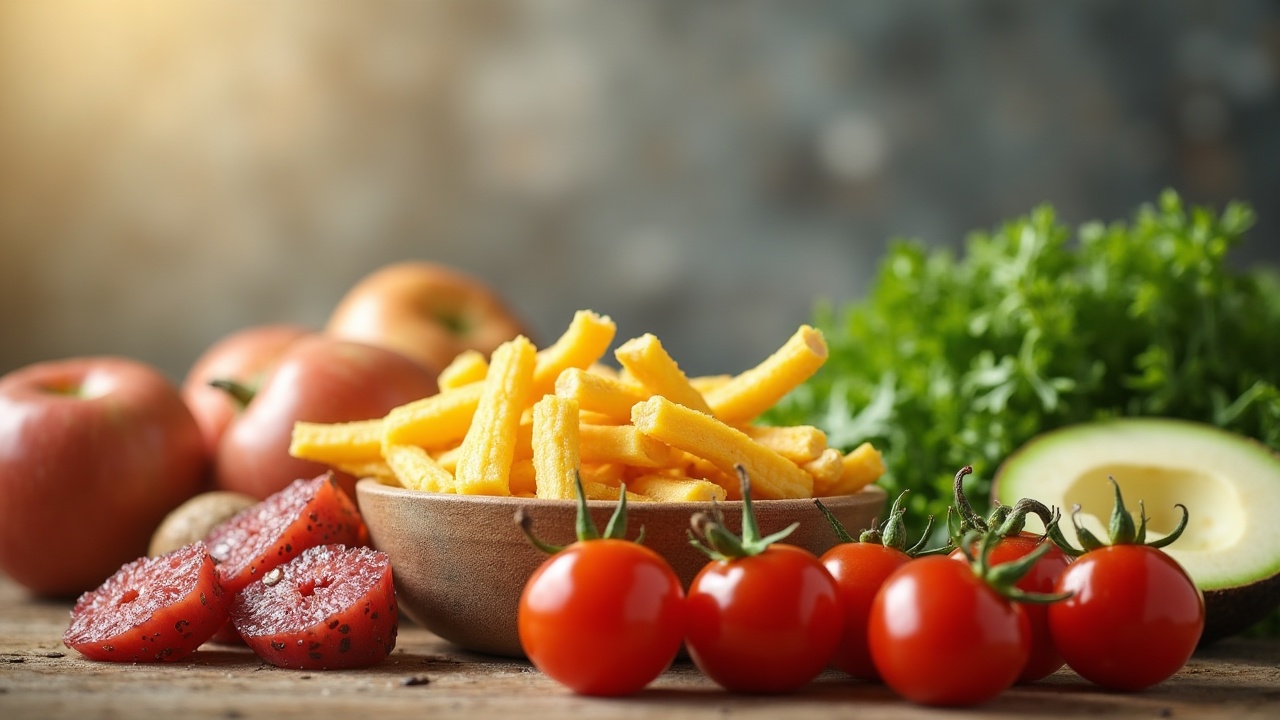
Ultra-processed foods (UPFs) are defined by the NOVA classification system as industrial formulations made mostly from substances extracted from foods — oils, fats, sugars, starches — plus additives that mimic the taste and texture of real food. Soda, packaged snacks, instant noodles, and most frozen ready-meals all qualify.
UPFs dominate the U.S. diet. Industry analyses using the NOVA database estimate that a large majority of packaged grocery items fall into this category. The bigger issue is energy density: UPFs pack far more calories into the same volume than whole fruits and vegetables, according to research from the Johns Hopkins Bloomberg School of Public Health. The same-size plate can carry two or three times the calories.
Texture matters too. Whole foods demand chewing and digest slowly; many UPFs are soft enough to eat far faster. A 2024 crossover study in Diabetes, Obesity and Metabolism linked reduced chewing and faster eating to higher energy intake. The faster food goes down, the less chance your fullness signals have to catch up.
The Science of Craving: Bliss Points and Engineered Desirability
Ultra-processed foods aren't just easy to eat — they're tuned to make you want more. Food scientist Howard Moskowitz's 1970s work on the "bliss point" — the sugar-fat-salt ratio that maximizes craving without tipping into "too much" — became a foundation of modern product formulation. A candy bar like a Snickers is engineered around that balance: by weight it's close to half sugar, with fat and salt dialed in to keep you reaching for the next bite instead of feeling satisfied.
The sensory engineering goes past flavor. Soft, smooth textures cut the chewing that normally paces a meal, and Hall's lab found people simply ate faster on the ultra-processed diet, taking in more calories per minute than on whole foods. That speed is the trap.
Timing is why it works. Satiety signals — including the gut hormone GLP-1 (glucagon-like peptide-1), the same one the weight-loss drug Ozempic mimics — take roughly 20 minutes to register fullness. Finish a dense meal in five, and your body hasn't caught up before you've overeaten.
32 Health Outcomes, One Pattern: What the Biggest UPF Review Found
The harms reach well past weight. A 2024 umbrella review of 45 meta-analyses covering nearly 10 million people, published in (https://www.bmj.com/) (Lane et al.), tied higher UPF intake to 32 distinct health outcomes. Among the strongest associations:
- Cardiovascular disease death risk: about 50% higher.
- Anxiety and common mental disorders: roughly 48-53% higher.
- Depression: around 22% higher.
- Type 2 diabetes risk: about 12% higher.
These are associations from observational data, not proof that UPFs alone cause each outcome — but the consistency across millions of people is hard to wave off. One proposed mechanism: UPFs are easy to overeat because they blunt the fullness cues that fiber and protein normally trigger, nudging the body toward chronic overconsumption. Consult your healthcare provider before making major dietary changes, especially if you manage a chronic condition.
Why Food Companies Can't Resist Ultra-Processed Designs
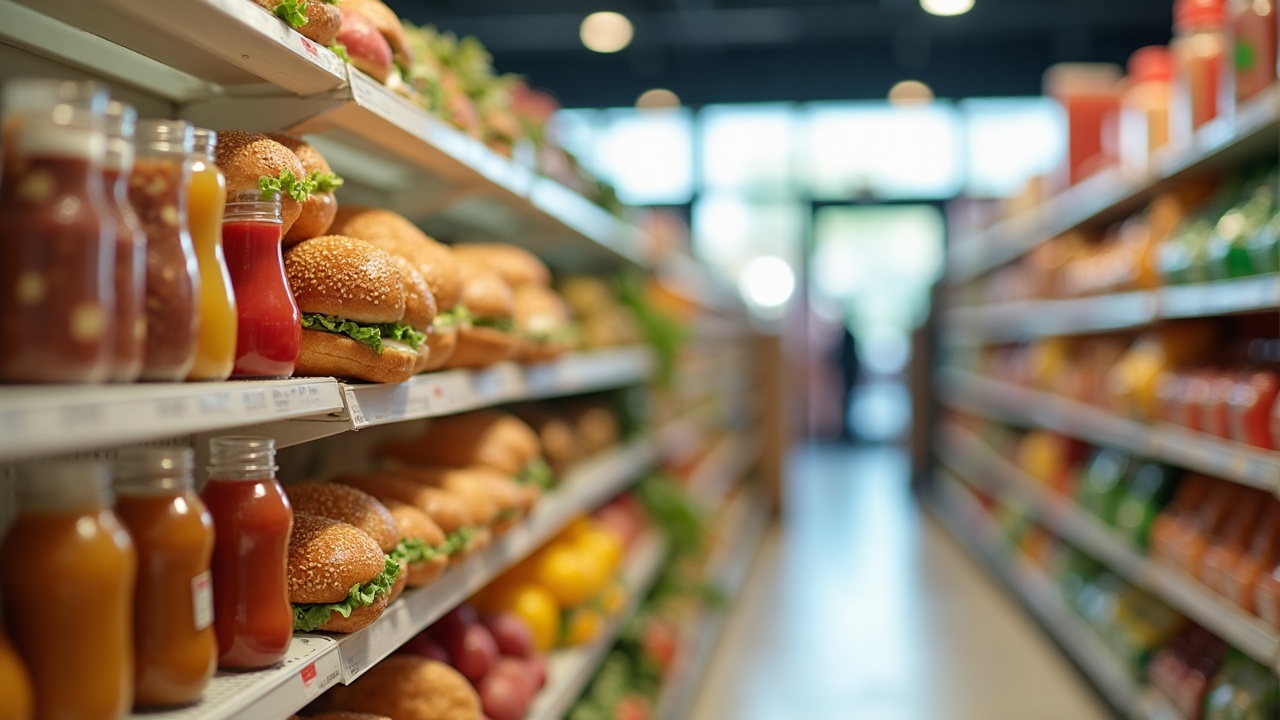
The economics are blunt. Ultra-processed foods are cheaper to produce, ship, and store than whole-food meals, and they need almost no preparation. A frozen pizza is five minutes of work; a homemade one is closer to 45. Convenience sells, and shelf-stable products waste less.
The targeting reaches younger eaters, the group that takes in the highest share of calories from UPFs. The category is now drawing legal scrutiny. In late 2024, a private plaintiff named Bryce Martinez filed suit in Pennsylvania against major food companies — including Kraft Heinz and Mondelez — alleging they engineered hyper-palatable products like Oreos and Lunchables to be addictive, citing tactics borrowed from the tobacco industry. It's regarded as one of the first major U.S. cases built squarely on UPF research.
Recommended reading: Target
Industry's defense is that "ultra-processed" lacks a precise scientific definition. At the margins, that's partly fair. But the broad pattern in CDC and NIH data is consistent: across millions of people, diets dominated by these products track with more calories eaten and worse long-term health.
What to Do About It
You don't need to banish every packaged food to change the equation. The point of attack is friction and speed. Shift even a third of your plate toward foods that demand chewing — whole fruit instead of juice, intact grains instead of refined ones, a piece of fish instead of a breaded nugget — and you slow eating enough for fullness signals to land before you overshoot. Start with one meal a day. Rebuild breakfast around whole foods this week and notice whether you reach for a mid-morning snack as fast. The deck is stacked — most of the average American diet now comes from foods engineered to be easy to overeat — but a single meal is a place to start.
How to Outsmart the System: Practical Strategies for Healthier Eating
Eating better doesn't require purism. Here's a framework built around fullness instead of convenience:
- The 5-ingredient rule: Be wary of foods with long lists of unrecognizable ingredients like "sodium caseinate" or "artificial flavor." Fewer, recognizable ingredients usually means less processing.
- Anchor with protein and fiber: Aim for 25–30g of protein (chicken, eggs, tofu) and 10–15g of fiber (vegetables, legumes) per meal — both slow digestion and support satiety.
- Slow down: Put the fork down between bites. Eating more slowly modestly increases fullness and gives your satiety signals time to register. It won't magically switch on a hormone, but it does help you stop sooner.
- Prep in batches: Cook whole-food meals once a week. A $10/lb chicken breast can stock five lunches at roughly 200 calories each, versus five frozen meals around 350 calories apiece.
Use the CDC's 55% figure as a gut check: if most of your grocery cart is ultra-processed, you're tracking the average American. Dialing that back is one of the few diet changes supported by controlled experimental data rather than correlation alone.
If you're choosing an eating approach to work with those signals, see intermittent fasting vs calorie counting.
Frequently Asked Questions
Do ultra-processed foods literally trick your brain into eating more?
Partly. NIH imaging research has found that highly palatable foods activate brain regions tied to reward. Combine that with soft textures and fast eating that outrun your fullness signals, and overeating gets easier — though "addiction" in the clinical sense is still debated.
How can I identify UPFs in the grocery store?
Use the NOVA framework: Level 1 is whole foods (apples, whole grains); Level 4 is ultra-processed (chips, sodas, most frozen meals). A long list of additives or ingredients you wouldn't keep in your own kitchen is the giveaway.
Is it possible to eat UPFs occasionally without overconsuming calories?
Yes. Keep portions small and pair them with whole foods — a salad with grilled chicken and a single cookie is fine. Trouble starts when UPFs become the default meal rather than the exception.
What are affordable, time-efficient alternatives to convenience foods?
- Canned beans (about $1 for 15 oz, ~15g protein). - Frozen vegetables (cheap, fast, and as nutritious as fresh). - Eggs (roughly $0.25 each, 6g protein).
The Canopy Brief
One financial insight. One career move. One tool worth knowing. Every Monday. 5 minutes. No fluff.
Free. No spam. Unsubscribe anytime.
Canopy Picks
Products we've vetted and recommend. We may earn a commission at no extra cost to you.
-
Optimum Nutrition Whey Protein
Gold standard whey — 24g protein per scoop, minimal fillers. -
Magnesium Glycinate
Doctor-recommended form for sleep quality and recovery. -
LectroFan White Noise Machine
Non-looping white noise for deeper, uninterrupted sleep. -
Why We Sleep by Matthew Walker
The science of sleep — and why it's your most important health tool.
Found an error? At Canopy Press, accuracy comes first. If you spot a claim that needs checking, let us know at [email protected] — we'll verify and correct it immediately.
Sources
- CDC NCHS Data Brief No. 536: Ultra-processed Food Consumption (Aug 2025)
- NIH: Study finds heavily processed foods cause overeating and weight gain
- Cell Metabolism: Ultra-Processed Diets Cause Excess Calorie Intake (Hall et al., 2019)
- Diabetes, Obesity and Metabolism: UPFs cause weight gain via reduced chewing frequency (Hamano, 2024)
- Johns Hopkins Bloomberg School of Public Health: What Are Ultra-Processed Foods? (2025)
- Stanford Medicine: Ultra-processed food — Five things to know (2025)
- AAMC: The health challenge of our time — ultra-processed foods
- NPR: San Francisco sues manufacturers over ultraprocessed foods (Dec 3, 2025)
- NBC News: San Francisco sues 10 companies that make ultraprocessed food (Dec 2025)
- SF Standard: San Francisco sues food giants over ultra-processed foods (Dec 2, 2025)
Explore by topic