Duplex vs ADU: Which House Hack Cash Flows in 2026?
An FHA duplex needs ~$14,875 down and rents out next month. A backyard ADU runs ~$180,000 and earns $0 for up to 14 months while you build. Most pick wrong.
Duplex vs ADU: Which House Hack Cash Flows in 2026? (For First-Time Owner-Occupant Investors)
This is for the reader who wants a tenant helping pay their mortgage — and is deciding between buying a duplex with little money down or building a rental in their backyard.
Here's the quick answer: if you're starting with limited cash, a Federal Housing Administration (FHA)-backed duplex wins on day-one cash flow — it needs roughly $14,875 down versus the ~$180,000 a detached accessory dwelling unit (ADU) typically costs to build ((https://homeguide.com/costs/adu-cost)). The ADU wins on long-term appreciation and if you already own the land. Most people get the math backwards.
Key Takeaways
- Best for low cash and immediate income: the FHA duplex — 3.5% down on two units, and lenders count 75% of projected rent toward your debt-to-income (DTI) ratio ((https://www.defalcorealty.com/blog/house-hacking-nyc-nj-guide/)).
- Best for existing homeowners and appreciation: the ADU — homes with one appreciated 22% more from 2013 to 2023, per a study from the Federal Housing Finance Agency (FHFA). The FHFA is the federal regulator that oversees Fannie Mae and Freddie Mac, so its housing-value data carries real weight with the lenders and appraisers who decide what your property is worth.
- Watch the construction gap: an ADU collects $0 for 8–14 months during permitting and the build, while a duplex cash-flows next month.
- The 2026 rule change: Fannie Mae now lets projected ADU rent help you qualify for a mortgage — a structural shift, but capped at 30% of qualifying income (Fannie Mae SEL-2025-08).
Comparison Table
| Feature | FHA Duplex House Hack | Backyard ADU |
|---|---|---|
| Upfront capital | ~$14,875 (3.5% down on a $425,000 duplex) | $90,000–$150,000 detached; ~$180,000 national average |
| Financing | FHA mortgage, 3.5% down, ~6.5–6.8% rate | Cash or HELOC near 6.53% (variable) |
| Time to first rent | Next month (move-in ready) | 8–14 months (permit + build) |
| Monthly rental income | ~$1,800/mo (one unit) | $1,000–$3,000/mo depending on size/market |
| Credit / eligibility | 580+ score, 12-month owner-occupancy | Home equity + local ADU zoning approval |
| Income counted to qualify | 75% of projected rent | Up to 30% of qualifying income (new in 2026) |
| Appreciation edge | Standard multifamily appreciation | +22% vs comparable homes (2013–2023) |
| Biggest drawback | You don't own the land outright cheaply; tighter unit choice | Long zero-income construction gap; large cash outlay |
The number almost no article models is that construction gap — and it's the whole ballgame. An ADU renting for $1,800/mo that sits in permitting and drywall for 12 months forgoes about $21,600 before it earns a dollar. The duplex collects that same $21,600 over its first year. That swing is bigger than most readers' entire down payment. The "better cash flow" winner flips depending on how long your money sits in drywall instead of a tenant's account.
Best For Picks

Best overall: the FHA duplex. With just 3.5% down on a two-unit property and lenders crediting 75% of projected rent toward your DTI ((https://www.defalcorealty.com/blog/house-hacking-nyc-nj-guide/)), it's the lowest-capital path to owning two income units. The 2026 FHA limit for a duplex in a standard-cost area is $693,050 ((https://honestcasa.com/blog/house-hacking-fha-loan-strategy)), so most metros are in range.
Best budget play: a prefab ADU — but only if you already own. A 600-square-foot prefab unit runs $50,000–$100,000 ((https://homeguide.com/costs/adu-cost)). If you have the equity and the land, that's a smaller absolute check than buying any property outright.
Best for current homeowners chasing appreciation: the detached ADU. You skip a second purchase, and the appreciation data is genuinely striking (more below).
The FHA Duplex House Hack
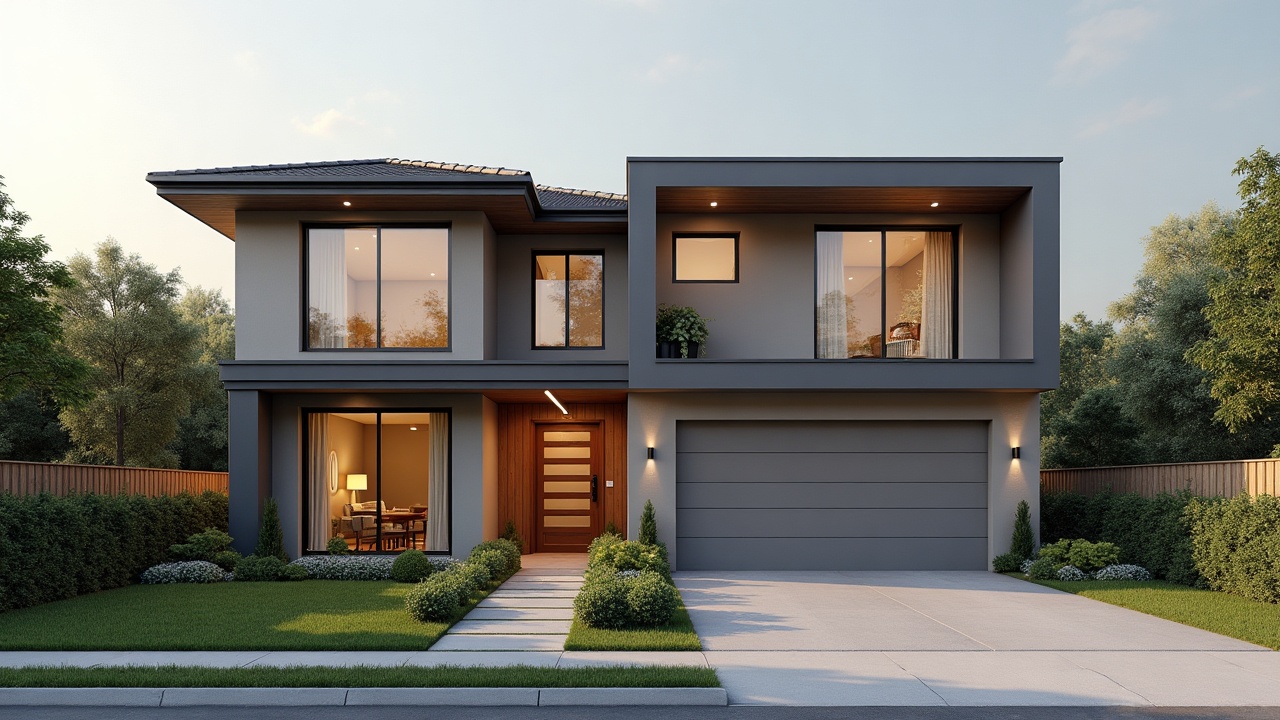
The duplex play is the closest thing real estate has to a cheat code for first-time buyers. You buy a two-unit property, live in one side, rent the other, and let your tenant absorb a big chunk of the payment. Because you're owner-occupying, you get FHA terms instead of investor terms.
Run the standard example: a $425,000 duplex with 3.5% down ($14,875) at roughly 6.8% produces about $2,650 in principal and interest, and a total housing cost of $3,200–$3,500 once you add taxes and insurance. Rent the other unit at $1,800/mo and your personal cost drops to $1,400–$1,700/mo ((https://www.defalcorealty.com/blog/house-hacking-nyc-nj-guide/)). You're housing yourself for less than a one-bedroom rental in most cities — and you own an appreciating asset.
The compounding move: after the 12-month owner-occupancy requirement, you can move out, rent both units, and repeat the strategy on a new two-to-four-unit property ((https://www.defalcorealty.com/blog/house-hacking-nyc-nj-guide/)). That's how small investors build a portfolio without ever fronting 20%.
Pros:
- Lowest upfront capital of any path — thousands, not six figures.
- Cash flows on day one; no construction wait.
- 75% of rent counts toward qualifying, so the property helps you afford itself.
- Repeatable after 12 months.
Cons:
- You're sharing a wall with a tenant.
- On three-to-four-unit deals, FHA's self-sufficiency test requires projected rents to cover the payment (duplexes are exempt) ((https://honestcasa.com/blog/house-hacking-fha-loan-strategy)).
- FHA mortgage insurance adds to the monthly cost.
- Your unit selection is limited to what's for sale.
An FHA duplex can require roughly 6–10x less upfront capital than building a detached ADU — about $14,875 versus $90,000–$150,000 — even though the ADU "skips" buying property.
The Backyard ADU House Hack
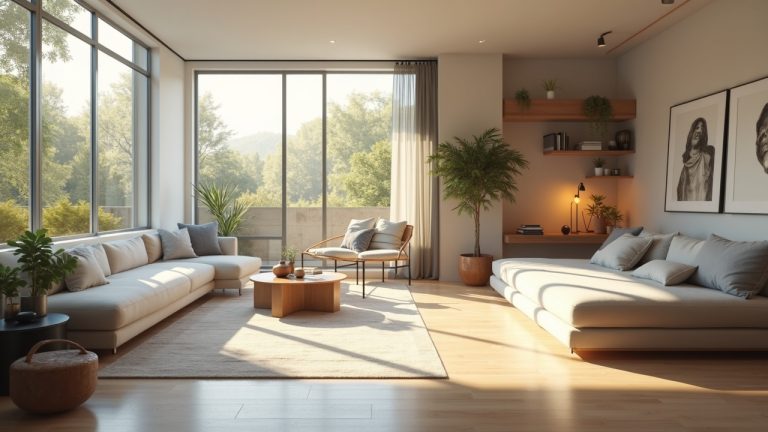
An accessory dwelling unit is a self-contained rental on land you already own — a converted garage, a basement unit, or a detached cottage. The pitch is concrete: no second property to buy, no shared wall in your main house, and a serious appreciation kicker on the home you already hold.
The appreciation data is the ADU's strongest argument. An FHFA study found properties with ADUs appreciated 22% more than comparable homes without one (2013–2023), and (https://sf.freddiemac.com/) reports ADU-equipped homes command a 25–34% price premium in strong-rental-demand markets. As a rule of thumb, an ADU adds roughly 30% of the home's per-square-foot value — a $150,000 build may add $100,000–$120,000 in appraised value ((https://www.snapadu.com/)).
The cost is the catch. Detached ADUs run $150–$250 per square foot, or $90,000–$150,000 for 600 square feet, with complex or high-cost-area builds exceeding $600/sq ft ((https://www.angi.com/articles/how-much-do-adu-costs.htm)). Most owners fund this in cash or with a home equity line of credit (HELOC) near today's 6.53% ((https://www.freddiemac.com/pmms)) — a higher, often variable rate compared to the duplex's owner-occupied mortgage.
The 2026 policy shift matters here. Fannie Mae's SEL-2025-08 (published October 8, 2025) lets projected ADU rental income count toward mortgage qualification on a one-unit primary residence for the first time — capped at 30% of total qualifying income, implemented in Desktop Underwriter v12.1 on March 21, 2026 (Fannie Mae SEL-2025-08). A December 2025 expansion extended this to two-to-three-unit properties under Uniform Appraisal Dataset (UAD) 3.6 appraisal rules — the standardized format appraisers use to report property data back to lenders ((https://www.clearcapital.com/the-adu-policy-change-why-expanded-fannie-mae-eligibility-requires-uad-3-6-appraisals/)).
Pros:
- No second property purchase; uses land you already own.
- Strong appreciation and resale premium.
- No shared wall in your main home.
- Rent potential of $1,000–$3,000/mo depending on size and market ((https://www.villahomes.com/)).
Cons:
- Large upfront cash or higher-rate HELOC.
- 8–14 months of zero income during permitting and construction.
- Appraised value depends on legality and utility connections; UAD 3.6 now requires Form 1007 or 1025 to document fair-market rent ((https://www.snapadu.com/)).
- Adding an ADU can trigger property-tax reassessment in some states.
Pricing Breakdown
| Path | Upfront | Financing rate | First rent | Typical monthly rent |
|---|---|---|---|---|
| FHA duplex ($425K) | ~$14,875 | ~6.8% fixed | Next month | ~$1,800 |
| Prefab ADU (600 sq ft) | $50,000–$100,000 | HELOC ~6.53% variable | 8–14 months out | $1,000–$2,200 |
| Detached ADU (600 sq ft) | $90,000–$150,000 | HELOC ~6.53% variable | 8–14 months out | $1,500–$3,000 |
Hidden costs to budget: FHA mortgage insurance on the duplex; permitting, utility hookups, and possible reassessment on the ADU. In high-rent metros the ADU economics improve sharply — San Diego ADUs average ~$2,600/mo and the Bay Area runs $2,400–$3,500/mo ((https://www.villahomes.com/)) — which is why local rent data, not national averages, should drive your decision.
How We Evaluated
We compared these two house hacks on the criteria that actually move returns: upfront capital, financing rate, time-to-first-rent, monthly cash flow, qualifying-income rules, and appreciation — and we modeled the ADU's construction gap as a real lost-income drag rather than ignoring it. We used the vendor and agency figures cited throughout. See our full methodology at /how-we-evaluate/. We did not build or rent either property ourselves; all figures come from published cost data and agency studies.
Verdict
Winner: the FHA duplex, for anyone whose constraint is cash. Roughly $14,875 gets you two income units that cash-flow immediately, and the 75%-rent qualifying rule does the heavy lifting. The runner-up is the detached ADU, and there's one clear scenario where it wins instead: you already own a home with equity in a high-rent metro, and you're optimizing for appreciation and resale premium over speed. In San Diego or the Bay Area, the 22% appreciation edge and $2,600+/mo rents can outrun the duplex's head start — once you've absorbed the year of zero income.
This is informational, not financial advice.
You might also find Cash-Out Refi vs HELOC vs Home Equity Loan: 2026 Winner useful.
Frequently Asked Questions
How long until an ADU breaks even?
Most ADU rental scenarios reach positive return on investment (ROI) or break-even within 5–10 years ((https://ladu.co/) — an industry source, not an agency dataset, so treat it as a planning estimate), depending on build cost and local rent. Factor in the 8–14 months of zero income before rent starts.
Can ADU rent help me qualify for a mortgage now?
Yes — a 2026 first. Fannie Mae's SEL-2025-08 lets projected ADU rent count toward qualifying on a one-unit primary residence, capped at 30% of total qualifying income (Fannie Mae SEL-2025-08).
What's the FHA down payment on a duplex versus a fourplex?
3.5% on a two-unit duplex; 5% on three-to-four units , which also require a 580+ credit score and 12-month owner-occupancy ((https://honestcasa.com/blog/house-hacking-fha-loan-strategy)).
Are mortgage rates still high in 2026?
Yes. The Freddie Mac 30-year fixed sat at 6.53% on May 28, 2026 ((https://www.freddiemac.com/pmms)), with purchase averages near 6.586% in early June ((https://money.usnews.com/loans/mortgages/articles/mortgage-rates-today-june-3-2026)).
Found an error? At Canopy Press, accuracy comes first. If you spot a claim that needs checking, let us know at [email protected] — we'll verify and correct it immediately.
Sources
- Home Guide — ADU Cost (2026)
- Angi — How Much Do ADUs Cost (2026)
- Freddie Mac Primary Mortgage Market Survey
- U.S. News — Mortgage Rates, June 3, 2026
- HonestCasa — House Hacking With an FHA Loan
- DeFalco Realty — 2026 Owner-Occupant House Hacking Guide
- Fannie Mae Selling Guide Announcement SEL-2025-08
- Clear Capital — ADU Policy Change and UAD 3.6
- (https://www.fhfa.gov/) · (https://sf.freddiemac.com/) · (https://www.snapadu.com/) · (https://www.villahomes.com/) · (https://ladu.co/)
Some links are affiliate links — we may earn a commission if you sign up through them, at no extra cost to you. We only recommend products we've researched. See our editorial standards for more.
The Canopy Brief
One financial insight. One career move. One tool worth knowing. Every Monday. 5 minutes. No fluff.
Free. No spam. Unsubscribe anytime.
Canopy Picks
Products we've vetted and recommend. We may earn a commission at no extra cost to you.
-
The Book on Rental Property Investing
Brandon Turner's guide to building wealth through rental properties. -
The Psychology of Money
How emotions and biases shape every financial decision you make. -
Credit Karma
Free credit monitoring — know your score before you apply. -
The Simple Path to Wealth
The index fund strategy that complements any real estate portfolio.
Found an error? At Canopy Press, accuracy comes first. If you spot a claim that needs checking, let us know at [email protected] — we'll verify and correct it immediately.
Explore by topic