Best Home Gym Under $500: What Actually Gets Used
At full retail, $500 buys one path: adjustable dumbbells plus a bench, or a bare barbell rack with no plates — not both. Patient used-market shopping changes the math.
A pair of Nordic Track Select-A-Weight 55s ($429 MSRP, often $329-$379 on sale) plus a Rep Fitness FB-3000 bench (~$199) lands around $608 at full price — over budget unless you catch a promotion. Drop down to the Power Block Sport 24 ($149, 3–24 lbs) with the same bench, and you're at $328, with $172 left for a mat, bands, or a jump rope.
Barbell setups are harder to squeeze in. The Titan X-3 Short Squat Stand at around $349 is the cheapest verified barbell-capable rack at this tier — but you still need a $200-plus barbell and another $150-plus for plates, which pushes the realistic total well over $700. Full power racks like the Titan T-3 (starting around $499-$599 for base configuration, per titan.fitness) or the Rogue RML-3W (around $695-$795, per roguefitness.com) sit outside the budget entirely.
You can own both setups if you shop the used market patiently. Facebook Marketplace and Craigslist routinely list Rep, Titan, and Rogue gear at 40-60% off retail. At full price, though, you're picking one path: dumbbells with a bench, or a bare barbell rack.
This article is informational, not medical or training advice. Compound lifts — squats, deadlifts, bench press, and overhead press, the four lifts that load multiple joints under heavy load — punish form mistakes quickly. A session or two with a certified strength coach (or a check-in with your doctor if you're returning from injury) is cheap insurance before going heavy.
(Pricing data as of May 2026, sourced from manufacturer websites.)
Adjustable Dumbbells: The Backbone of a Compact Home Gym
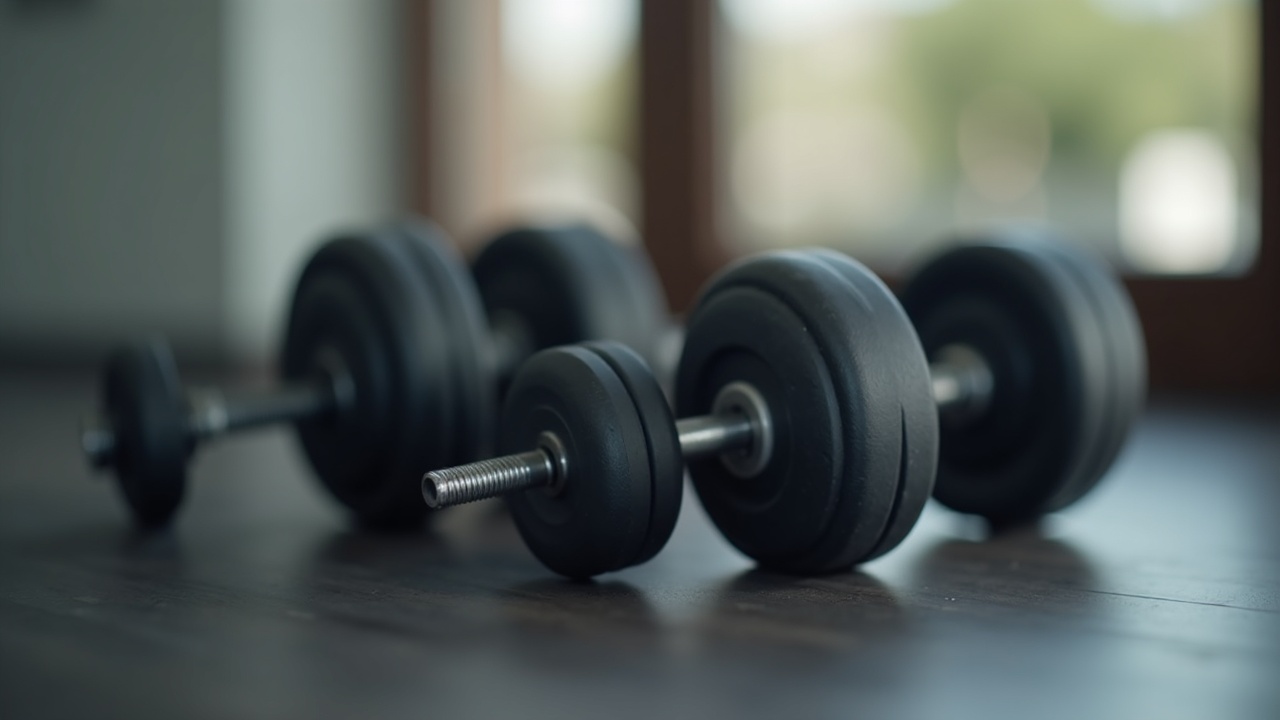
For most apartment-sized setups, a pair of adjustable dumbbells does more work than any other piece of equipment under $500. One pair replaces roughly ten fixed-weight pairs and trains the chest, back, shoulders, arms, glutes, hamstrings, and core — every major muscle group except the heavy lower-back-and-hip work that only a loaded barbell can really hit.
Three models are worth a real look:
| Model | Range (per hand) | Price (MSRP) | Best for |
|---|---|---|---|
| Nordic Track Select-A-Weight | 10-55 lbs | $429-$549 | Compact storage, full-body training |
| Bow flex Select Tech 552 | 5-52.5 lbs (2.5-lb increments up to 25 lbs) | ~$429 | Fine increments for arms and shoulders |
| Power Block Sport EXP | 5–50 lbs (expandable to 90) | ~$329 | Buyers who plan to add weight over time |
The Nordic Track and Bow flex have effectively the same top end at 52.5-55 lbs per hand. That's enough for goblet squats, single-arm rows, and most pressing for the first year or two of training — but not enough for heavy dumbbell deadlifts or for stronger lifters pushing past 60-lb dumbbell bench presses. The Bow flex's edge isn't range; it's the 2.5-lb increments, which matter for shoulder and arm work where 5-lb jumps stall progress. The Power Block Sport EXP is the cheapest up front and the only one of the three you can expand to 90 lbs per hand with add-on kits — the longest runway if you stick with training.
Recommended reading: Best For
If you're new to lifting, any of the three works. Brand-name pricing has converged: published prices on nordictrack.com, bowflex.com, and powerblock.com range from roughly $329 (Power Block Sport EXP) to $549 (Nordic Track at the top of its range), a spred of up to $220 at MSRP, and all three go on sale several times a year.
What none of them replaces: a barbell, for heavy back squats and conventional deadlifts. If those are your priority, skip ahead.
Flat Benches: The Half That Makes Dumbbells Useful
Dumbbells alone cap your exercise options fast. A bench unlocks bench press variations, incline pressing, dumbbell rows, step-ups, Bulgarian split squats, and seated shoulder work — the gap between a dumbbell-only routine and a real strength program.
The Rep Fitness AB-3000 (~$329) is the value adjustable pick, and the one that actually pairs with dumbbells for incline pressing:
- 1,000-lb capacity with an 11-gauge steel frame
- Seven backrest angles from decline through full vertical
- Pop-pin adjustment (faster than ladder-style) and compact enough for apartment storage
If you only need flat pressing and rowing, Rep's FB-3000 (~$199) is the cheaper flat-only sibling — same frame quality, no incline.
It's heavier and stiffer than the budget benches you'll find on Amazon under $100, which tend to wobble at the top of a press — a real injury risk when you're holding 50 lbs over your face.
Worth knowing: commercial-grade flat benches from Rep, Titan, and Rogue routinely show up on Facebook Marketplace for $75-$120, often barely used. If you're buying secondhand, inspect the welds and the upholstery — and skip anything with rust on load-bearing posts.
Barbell Training on a Budget: What $500 Actually Buys
A barbell rack is the only way to train heavy back squats, deadlifts, and overhead presses safely. The cheapest verified options at this tier are the Titan X-3 Short Squat Stand at around $349 and the Fringe Sport Garage Series squat rack at around $395. Both are real, currently in stock, and have published spec sheets.
A squat stand by itself does nothing, though. You also need:
- A 45-lb Olympic barbell — $200-$280 for a usable bar
- 100-plus lbs of plates — $150-$200 for a starter set new
- A rubber mat if you're lifting over a wood subfloor — $40-$80
Realistic total: $750-$900 to actually train. That's why "barbell under $500" almost always means buying the rack now and accumulating the bar and plates over three to six months — or sourcing used plates locally. Used iron is cheap: a 45-lb plate runs about $1 per pound new and 50–70 cents per pound used.
The $500 Home Gym: Who Buys What, and Why
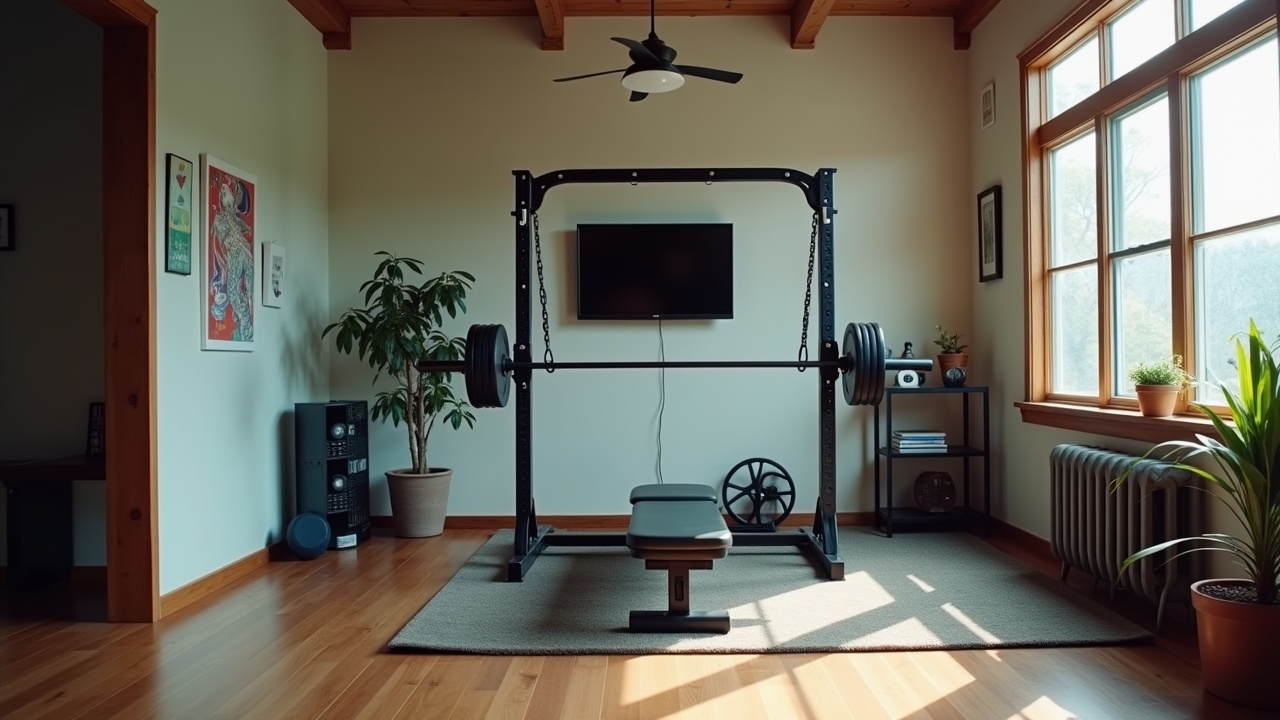
Home strength equipment has a real price floor, which is part of why home cardio (treadmills, bikes, rowers) outsells home strength gear at the entry level. A beginner can start running for $0, but starting barbell training costs hundreds before the first rep.
The Health & Fitness Association — the trade group formerly known as IH RSA (International Health, Racquet & Sports club Association), which tracks commercial gym membership and retention — has reported for years that roughly half of new commercial gym members stop attending within six months. There's no clean equivalent data for home equipment, but the secondhand market tells the story. Facebook Marketplace listings for barely-used adjustable dumbbells in major metros routinely sell at 40-60% off retail, and Rep, Titan, and Rogue benches and racks turn over constantly.
Two practical takeaways from that pattern:
If you're not sure you'll stick with training for a year, buying used isn't frugality — it's risk management. You can recoup most of what you spend if you bail.
If you're sure you'll stick with it, buy new from one manufacturer's ecosystem (Rep, Titan, or Rogue) so accessories and upgrades match.
How to Choose: Dumbbells + Bench or a Barbell Rack?
For Most Buyers: Adjustable Dumbbells + Rep FB-3000 (~$510-$560 at MSRP)
Trains every major muscle group except the conventional deadlift pattern. Fits in an apartment closet. More forgiving on form than barbell work. Wait for a sale on the dumbbells and the combo lands under $500.
For Lifters Committed to Barbell Work: Titan X-3 or Fringe Garage Series + Used Bar and Plates
Buy the rack now (~$349-$395) and source the bar and plates from Facebook Marketplace and Craigslist over the next few months. Lower up-front pain, real strength upside.
For Patient Buyers: Used Everything
You can often build a full Rep or Titan setup — bench, rack, bar, and 200 lbs of plates — for $400-$500 if you watch local listings for two or three months. The tradeoff is time, not money.
For a deeper read on the criteria behind these picks — pricing transparency, manufacturer specs, durability data, and verified user reviews — see our (/how-we-evaluate/) methodology.
Frequently Asked Questions
Can I build a full home gym for under $500?
Yes, if you're willing to wait for sales or buy used. New at MSRP, a dumbbell-and-bench setup runs about $510-$560; on sale or secondhand, $400-$450 is realistic.
Are adjustable dumbbells worth it compared to fixed pairs?
For nearly every home buyer, yes. One adjustable pair replaces about ten fixed pairs and stores in a square foot of floor space. Fixed dumbbells only make sense if you have a dedicated gym room and want to skip the few seconds it takes to change weight.
Why don't real power racks cost under $500?
Power racks need heavy-gauge steel (typically 11-gauge) and tight engineering tolerances to be safe at high loads. The Titan T-3 starts at $650 and the Rogue RML-3W at $795 because anything cheaper either uses thinner steel or skips safety features like proper J-cup bracing.
How do I decide between dumbbells + bench or a barbell rack?
Match the gear to the lift you most want to train. If you'll mostly do unilateral work, dumbbell pressing, rows, and split-squat patterns, dumbbells and a bench cover it. If a heavy back squat or conventional deadlift is the lift you actually care about getting strong in, no amount of dumbbell training substitutes for a barbell, and you should plan for the $750-$900 real total over time rather than forcing the budget down to $500.
Is it safe to start barbell training without a coach?
Possible but not ideal. Even one or two sessions with a certified strength coach to check squat depth, hip hinge, and bar path can prevent the kind of injuries that end home training programs. If a coach isn't an option, film your sets from the side and compare to published technique standards from a credible source.
Sources
- Nordic Track — Select-A-Weight Dumbbells
- Bow flex — Select Tech 552
- Power Block — Sport EXP
- Rep Fitness — FB-3000 Bench
- Titan Fitness — X-3 and T-3 racks
- Rogue Fitness — RML-3W rack
- Fringe Sport — Garage Series rack
- Health & Fitness Association (formerly IH RSA)
Final Verdict:
Here's the honest answer. For most people under 500 dollars, get adjustable dumbbells and the Rep FB-3000 bench. It trains more muscle groups, takes less space, and is more forgiving on form than a budget barbell setup. If you know you want to back squat and deadlift heavy, buy the Titan X-3 rack now and accumulate the bar and plates used over the next few months. Either way, used gear on Facebook Marketplace is the biggest win in this budget. Full pricing tables and the used-market checklist are on canopy dot press. Follow for more honest gear breakdowns.
This article contains affiliate links. If you purchase through these links, we may earn a commission at no additional cost to you. As an Amazon Associate, we earn from qualifying purchases. We only recommend products evaluated against published specs and verified user reviews — see our (/how-we-evaluate/) methodology for more.
The Canopy Brief
One financial insight. One career move. One tool worth knowing. Every Monday. 5 minutes. No fluff.
Free. No spam. Unsubscribe anytime.
Canopy Picks
Products we've vetted and recommend. We may earn a commission at no extra cost to you.
-
Optimum Nutrition Whey Protein
Gold standard whey — 24g protein per scoop, minimal fillers. -
Magnesium Glycinate
Doctor-recommended form for sleep quality and recovery. -
LectroFan White Noise Machine
Non-looping white noise for deeper, uninterrupted sleep. -
Why We Sleep by Matthew Walker
The science of sleep — and why it's your most important health tool.
Found an error? At Canopy Press, accuracy comes first. If you spot a claim that needs checking, let us know at [email protected] — we'll verify and correct it immediately.
Found an error? At Canopy Press, accuracy comes first. If you spot a claim that needs checking, let us know at [email protected] — we'll verify and correct it immediately.
Sources
- Best Home Gym Equipment Under $500 (2026 Guide) — IronSetLab
- Best Home Gym Equipment in 2026: What to Buy First — Gym Navigator
- Bow Flex Select Tech Adjustable Dumbbells (official)
- Bow flex Select Tech 552 at all-time-low price — Tom's Guide
- Power Block vs Nordic Track 2026 Comparison — Flex Dumbbells
- REP Fitness FB-3000 Flat Bench (official)
- REP Fitness FB-3000 Review 2026 — Garage Gym Reviews
- Home Fitness Equipment Market Size — Fortune Business Insights
- Home Fitness Equipment Market — Mordor Intelligence
- 2025 U.S. Health & Fitness Consumer Report — Health & Fitness Association
Explore by topic