Oura vs WHOOP vs Apple Watch: Best Sleep Tracker?
The most popular of these three sleep trackers finishes dead last at the one thing you're actually buying it for.
- Key Takeaways
- The $350 Price Tag for Precision: Why Oura Ring 4 Leads in Sleep Accuracy
- Pricing Models: Upfront Costs vs. Subscription Lock-In
- Sleep Tracking Accuracy: Clinical Validation Breakdown
- Battery Life and Design: Wearability for Long-Term Use
- Beyond Sleep: Where Each Device Actually Earns Its Price
- How to Choose: A Decision Matrix for Sleep Tracker Buyers
- Sources
- Takeaway
Three sleep trackers. One costs four hundred dollars — then charges you six bucks a month to see your own data. One has no screen at all. And the most popular one? Dead last at the thing you're buying it for. I compared the Oura Ring 4, WHOOP 5.0, and Apple Watch using clinical validation studies — not marketing claims. Here's what the data actually says.
Key Takeaways

- Oura Ring 4 delivers the most clinically validated sleep staging, but cancel the $5.99/month subscription and you lose access to most of your own data — a dealbreaker worth knowing upfront.
- WHOOP 5.0 bundles hardware into its subscription, making it the lowest-friction option for athletes and serious fitness trackers who want recovery metrics alongside sleep.
- Apple Watch wins on ecosystem breadth but finishes last in sleep accuracy — fine for casual tracking, not for diagnosing why you wake up exhausted.
The $350 Price Tag for Precision: Why Oura Ring 4 Leads in Sleep Accuracy
The Oura Ring 4 runs $349–$499 upfront, plus $5.99/month or $69.99/year for the subscription that unlocks your detailed metrics. Compare that to WHOOP 5.0 ($199–$359/year, hardware included) and Apple Watch ($249–$799, no subscription required). What Oura's premium buys you is one thing the others can't match: clinical-grade precision.
The ring packs red, infrared, and green LEDs into a sensor array that reads your pulse from the finger — where blood flow runs stronger and motion artifact stays lower than the wrist. That difference matters more than the spec sheet suggests. A 2024 validation study published in the National Library of Medicine found Oura's heart rate variability (HRV) measurements hit a concordance correlation of 0.99 versus electrocardiogram (ECG) reference, the highest among consumer wearables. Sleep stage sensitivity ranged from 76.0–79.5% against polysomnography (PSG) — the clinical gold standard — making Oura statistically indistinguishable from a lab sleep study across wake, light, deep, and REM stages.
What does that mean in practice? If your HRV drops 15% overnight — a reliable signal of stress, illness, or overtraining — you want the number you're reacting to to be real. With Oura, it is. With less accurate devices, you might reorganize your training week around noise.
Here's what Oura's marketing glosses over: cancel that $5.99/month subscription, and the sleep staging, HRV trends, and long-term patterns you've built over months or years vanish behind a paywall. You keep basic sleep scores and readiness. Everything else disappears. You're not buying a tracker — you're renting access to your own biology.
Pricing Models: Upfront Costs vs. Subscription Lock-In
The sticker price tells you almost nothing. Total cost of ownership over three years — roughly one device lifecycle — is the number that matters.
- Oura Ring 4: $349–$499 hardware plus $69.99/year subscription. Three-year total: $559–$709 (annual plan) or $565–$715 (monthly). That subscription isn't optional — without it, you're wearing a $400 ring that shows a basic sleep score and little else.
- WHOOP 5.0: No hardware purchase. You pay $199–$359/year depending on commitment length. Three-year total: $597–$1,077. The device ships free with your membership, and WHOOP has historically offered free upgrades to new hardware for active members.
- Apple Watch: One-time purchase of $249–$799 with no recurring fees. But Apple Watches typically need replacement every 3–4 years as batteries degrade, so budget for that cycle.
WHOOP looks cheapest on the low end, but its top tier ($359/year for the Life plan with ECG-capable WHOOP MG) approaches Oura's total cost. Apple Watch remains the only option where you own your data outright — no subscription gatekeeping. Apple's health data stays in your Health app regardless of what you pay.
Sleep Tracking Accuracy: Clinical Validation Breakdown
Total hours slept gets all the attention. It's also a blunt instrument. Two people can sleep seven hours and feel completely different the next morning. The gap comes down to how much deep and REM sleep they got — and whether their heart rate variability held steady or crashed overnight. These three devices measure that with wildly different accuracy.
| Metric | Oura Ring 4 | WHOOP 5.0 | Apple Watch |
|---|---|---|---|
| HRV Accuracy (vs ECG) | 0.99 concordance | 0.94 concordance | Not independently tested vs ECG |
| Sleep Heart Rate | Underestimates by −0.4 bpm | Underestimates by −0.3 bpm | Overestimates by +0.8 bpm |
| Sleep Stage Sensitivity | 76.0–79.5% vs PSG | Not independently validated | 50.5–86.1% vs PSG |
That wide range on Apple Watch (50.5–86.1%) is the problem. Some sleep stages track reasonably well while others — particularly deep sleep — are essentially a coin flip. A 2023 study in the journal Sleep found that wrist-based optical sensors consistently struggle with deep sleep detection compared to finger-based sensors, largely because wrist motion during sleep introduces more signal noise.
Oura's validation came from 536 nights across 13 healthy adults — a small but rigorous sample. WHOOP has published less independent validation data for sleep staging specifically, which is worth noting if accuracy is your primary buying criterion.
Battery Life and Design: Wearability for Long-Term Use
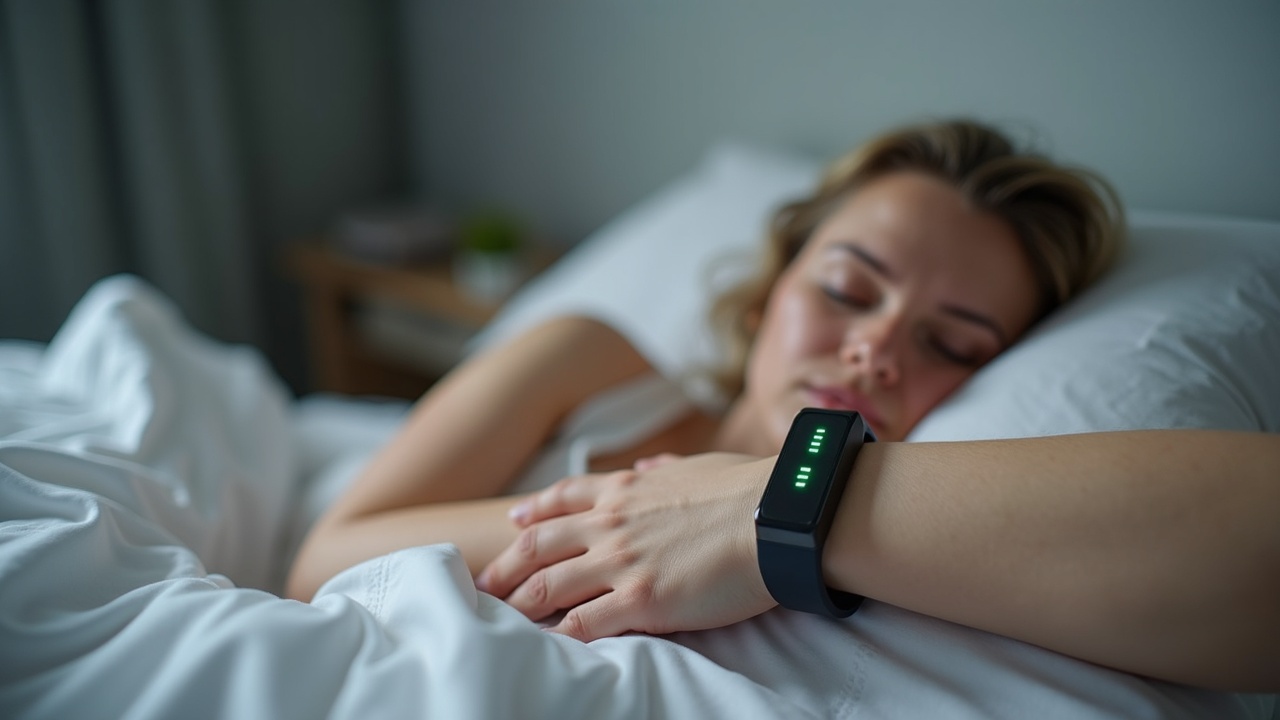
The best sleep tracker is the one you actually wear to bed. Obvious — but Apple Watch's daily charging habit forces a choice between tracking your sleep and having a charged watch for tomorrow. Oura and WHOOP never ask you to make that tradeoff.
Recommended reading: Atomic Habits by James Clear
Oura Ring 4 lasts 5–8 days per charge and is water-resistant to 100 meters. You forget you're wearing it. That's the point — a ring doesn't shift your sleep position or snag on your pillowcase. If you've tried wrist trackers and abandoned them, the form factor alone might justify Oura's price.
WHOOP 5.0 pushes 14+ days between charges thanks to a processor WHOOP claims is 10x more power-efficient than its predecessor. The band is 7% smaller than WHOOP 4.0 and slides under a shirt sleeve. You can charge it without removing it, using a slide-on battery pack.
Apple Watch lasts roughly one day — Apple's own number, not ours. In practice, that means charging every morning. Forget once, and you're picking between a dead watch tomorrow or no sleep data tonight. The Series 10 added fast charging — zero to eighty percent in thirty minutes — but that's a band-aid on a fundamental design limitation, not a fix.
Two weeks of WHOOP battery versus one day of Apple Watch isn't a minor spec difference. It's the gap between a device that tracks your sleep by default and one that demands daily discipline to track anything at all.
Beyond Sleep: Where Each Device Actually Earns Its Price
Sleep tracking is table stakes. The real question: what else do you get for your money, and do those extras match how you actually live?
Oura Ring 4 auto-detects 40+ workout types and estimates VO2 max, but it can't do ECG, blood oxygen, or real-time workout metrics. It's a passive tracker. You wear it, check your scores in the morning, adjust your day. Want to glance at your heart rate mid-run? Oura can't help. For people who treat health data as a morning briefing rather than a live dashboard, that passivity is a feature — no notifications buzzing your finger during dinner.
WHOOP 5.0 leans hardest into recovery science. Its Strain Score quantifies daily cardiovascular load, and the Recovery metric tells you whether to push hard or back off. The $359/year Life plan includes the WHOOP MG body sensor with ECG capability — the only option here that monitors heart rhythm without a separate medical device. Genuinely useful if you train at high intensity and want early warning on cardiac stress. But WHOOP has no screen, no notifications, no apps. It quantifies your body's readiness and ignores everything else.
Apple Watch does the most, and it's not close. ECG, blood oxygen (SpO2), fall detection, crash detection, third-party apps, Apple Pay, phone calls from your wrist. If you already own an iPhone, your sleep data syncs alongside workouts, nutrition, and medication logs in Apple Health. No other device matches that integration. The tradeoff: Apple Watch is a generalist. It tracks sleep because it tracks everything, not because sleep is its focus.
The surprising conclusion: the device that tracks sleep worst (Apple Watch) might still be the right choice if sleep ranks fifth on your priority list behind fitness, safety, communication, and convenience.
How to Choose: A Decision Matrix for Sleep Tracker Buyers
| Priority | Best Choice |
|---|---|
| Clinical-grade accuracy | Oura Ring 4 |
| Recovery-focused athletics | WHOOP 5.0 |
| Ecosystem integration | Apple Watch |
If you have a sleep disorder or chronic condition you're actively managing, Oura's PSG-grade staging gives you data worth sharing with your doctor. Just budget for the subscription indefinitely — your data is hostage to it.
If you train seriously and want one device governing your recovery schedule, WHOOP's Strain and Recovery scores are built for that workflow. This isn't a casual user's device — it's a coach on your wrist.
If you want a watch that also tracks sleep, Apple Watch is the pragmatic pick. The sleep data is directional, not diagnostic, but it lives alongside everything else in your health stack without adding another device to charge.
Frequently Asked Questions
Does the Oura Ring 4 accurately track REM sleep?
Yes. Validation studies show Oura's REM detection is statistically indistinguishable from polysomnography. But accessing detailed REM data requires the active subscription — without it, you only see a simplified sleep score.
Is WHOOP's subscription model worth the long-term cost?
For athletes and serious fitness trackers who use the Strain and Recovery scores daily, yes. The all-inclusive pricing removes upfront cost, and free hardware upgrades for active members sweeten the deal. For casual sleep-only tracking, WHOOP is overkill.
Can Apple Watch replace a clinical sleep study?
No. Apple Watch provides useful trend data — you slept more or less than usual — but its stage detection accuracy varies too widely to diagnose sleep disorders. It's a screening tool at best, not a replacement for medical evaluation.
What happens if I cancel my Oura subscription?
You keep basic readiness and sleep scores, but lose access to detailed sleep staging, HRV trends, temperature tracking, and most historical data analysis. The ring still collects data, but you can't see most of it.
Sources
- National Library of Medicine — Oura Ring Validation Studies — HRV concordance and sleep staging accuracy vs. polysomnography
- Sleep Journal — Wrist vs. Finger Sensor Accuracy — Comparative analysis of optical sensor placement for sleep detection
- Apple Watch Technical Specifications — Battery life, health features, and pricing
- WHOOP 5.0 Product Details — Membership pricing, sensor specs, and battery claims
- Oura Ring 4 Support Documentation — Subscription features, water resistance, and battery life
Takeaway
The uncomfortable truth about sleep trackers: the most accurate one (Oura) holds your data ransom behind a subscription, the most athlete-focused one (WHOOP) has no screen, and the most versatile one (Apple Watch) finishes last at the thing you're buying it for.
If forced to pick one number that matters most, it's Oura's 0.99 HRV concordance. That's not a marketing claim — it's a clinical result that means the data driving your decisions is real. Whether that precision is worth $70/year on top of a $400 ring depends on what you're doing with it. Sharing trends with a sleep specialist? Oura, no question. Glancing at a score over coffee? Save your money.
Some links are affiliate links — we may earn a commission if you sign up through them, at no extra cost to you. We only recommend products after analyzing published specs, clinical studies, and verified user reviews. See our editorial standards and how we evaluate for more.
The Canopy Brief
One financial insight. One career move. One tool worth knowing. Every Monday. 5 minutes. No fluff.
Free. No spam. Unsubscribe anytime.
Canopy Picks
Products we've vetted and recommend. We may earn a commission at no extra cost to you.
-
Optimum Nutrition Whey Protein
Gold standard whey — 24g protein per scoop, minimal fillers. -
Magnesium Glycinate
Doctor-recommended form for sleep quality and recovery. -
LectroFan White Noise Machine
Non-looping white noise for deeper, uninterrupted sleep. -
Why We Sleep by Matthew Walker
The science of sleep — and why it's your most important health tool.
Found an error? At Canopy Press, accuracy comes first. If you spot a claim that needs checking, let us know at [email protected] — we'll verify and correct it immediately.
Found an error? At Canopy Press, accuracy comes first. If you spot a claim that needs checking, let us know at [email protected] — we'll verify and correct it immediately.
Sources
- Oura Ring Membership Pricing
- Oura Ring 4 Technology
- Oura Ring 4 Battery Life Support
- Oura Independent HRV Accuracy Study
- WHOOP Membership Options
- WHOOP One Plan
- WHOOP Peak Plan
- WHOOP Life Plan
- Introducing WHOOP 5.0 and WHOOP MG
- WHOOP 5.0 Press Release
Explore by topic