
Do Probiotics Actually Work? What the Science Says
Most of the 40 bottles in the probiotic aisle won't do anything for you — strong evidence backs just one narrow use, and it comes down to a single word on the label.
Do Probiotics Actually Work? What the Science Says
This article is informational, not medical advice. Consult your healthcare provider before starting any supplement, especially if you have a chronic condition.
You just finished a course of antibiotics, and the pharmacist waves you toward the probiotic aisle. Forty bottles. Fifteen to seventy dollars each. Here's the uncomfortable truth: most of them won't do anything for you. A small handful actually will — and the difference comes down to one word on the label that almost nobody reads.
The U.S. probiotic supplement market is on track to exceed $3.5 billion by 2030, but the evidence behind that growth is uneven. Strong data supports probiotics for one narrow use: preventing diarrhea after antibiotics. Almost everything else marketed as "gut health" is a much weaker bet.
Key Takeaways
- The strongest evidence supports probiotics for antibiotic-associated diarrhea and acute infectious diarrhea — not general wellness.
- Strain and dose matter more than brand. Only a handful of strains have clinical evidence behind them.
- Most products aren't reviewed by the Food and Drug Administration (FDA) before sale, so labels often skip the strain detail you actually need.
- Saccharomyces boulardii is shelf-stable; most Lactobacillus strains require refrigeration to stay potent.
What Are Probiotics?

Probiotics are live microorganisms that, in adequate doses, can confer a health benefit, according to the National Center for Complementary and Integrative Health (NCCIH), the federal agency that funds research on alternative therapies. The "good bacteria" framing is shorthand for organisms that help maintain a balanced gut microbiome. But the effect is strain-specific. Generic claims about Lactobacillus or Bifidobacterium tell you almost nothing.
Why the regulator gap matters
In the U.S., probiotics fall under the Dietary Supplement Health and Education Act (DSHEA), the 1994 law that lets supplement makers sell products without first proving they work. That means Food and Drug Administration (FDA) approval isn't required before a probiotic reaches shelves. The practical consequence: labels often list a species like Lactobacillus rhamnosus without naming the strain — and the strain is where the evidence lives. L. rhamnosus GG, for example, has been studied in dozens of trials. A different L. rhamnosus strain may have none.
Recommended reading: None
Colony-forming units (CFU) — the count of live organisms per dose — also vary widely. Studies for antibiotic-associated diarrhea generally use 5–20 billion CFU per day.
Where the Evidence Is Strongest
Two uses have consistent, replicated support.
Antibiotic-associated diarrhea. A 2025 meta-analysis found that probiotics taken alongside or after a course of antibiotics cut the incidence of antibiotic-associated diarrhea (AAD) by roughly 40% in adults. The strains driving that result are Saccharomyces boulardii (sold as Florastor) and Lactobacillus rhamnosus GG (sold as Culturelle). The European Society for Paediatric Gastroenterology, Hepatology and Nutrition (ESPGHAN), the pediatric body whose guidelines shape much of European clinical practice, recommends at least 5 billion CFU/day for children on antibiotics. The National Institutes of Health (NIH) Office of Dietary Supplements suggests 10–20 billion CFU/day for adults.
Acute infectious diarrhea. A Cochrane review found probiotics shorten an episode of acute infectious diarrhea — the kind triggered by travel or a foodborne infection — by about a day, and reduce the number of episodes on day two of illness. The effect is modest but real, and the same two strains lead the pack.
The Evidence Gap
For most conditions probiotics get marketed for, the data thins out fast.
Irritable bowel syndrome. The American Gastroenterological Association (AGA), the leading U.S. professional body for digestive-disease specialists, reviewed 76 randomized controlled trials (RCTs) covering 44 different probiotic formulations for irritable bowel syndrome (IBS). Only two showed consistent benefit across multiple outcomes. The average shopper with IBS is essentially picking a strain at random from a list that mostly doesn't work.
Inflammatory bowel disease. The AGA explicitly doesn't recommend probiotics for Crohn's disease or ulcerative colitis — the two conditions that make up inflammatory bowel disease (IBD). Evidence is insufficient.
General "gut health." This is the marketing engine driving most retail sales, and it has the weakest support of any use case. Without a specific condition to target, there's no measurable outcome to study. If you don't have a condition the probiotic is shown to treat, you're paying $30 a month for a placebo with branding.
How to Choose a Probiotic
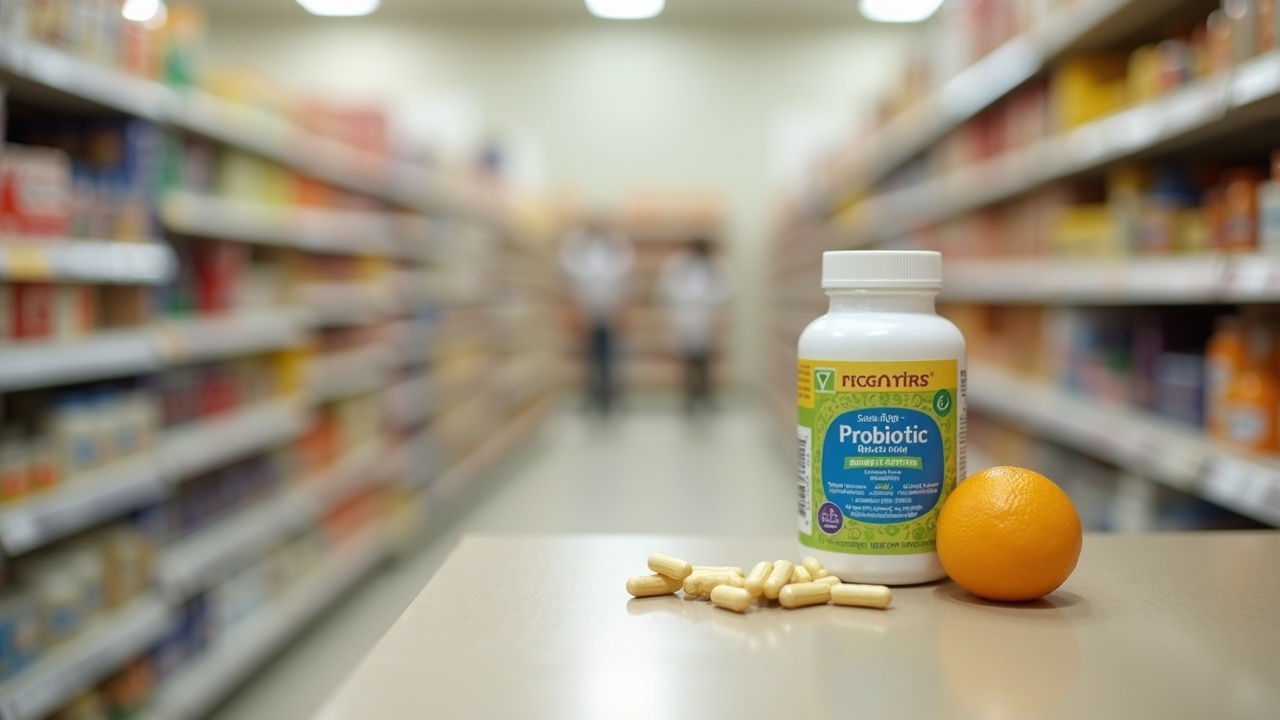
The supplement aisle can feel overwhelming. Three things actually matter.
Strain, not species. Look for the strain designation — L. rhamnosus GG, S. boulardii CNCM I-745, B. infantis* 35624. A species name alone doesn't tell you the product was tested for anything.
CFU count. Aim for 10–20 billion CFU/day if you're an adult trying to prevent AAD. Higher isn't always better, but anything under 1 billion CFU is unlikely to do much.
Third-party verification. Look for a seal from the United States Pharmacopeia (USP) or NSF International (NSF), both nonprofit standards organizations that test supplements for label accuracy. The programs are voluntary, but they're the closest thing to a quality floor.
Three popular options, with what you actually get for the money:
- Florastor (S. boulardii CNCM I-745): $68.68 for 60 capsules — about $1.14 per 250 mg dose, the strain dose used in most AAD trials (florastor.com, as of May 2026).
- Culturelle Daily Probiotic (L. rhamnosus GG, 10 billion CFU): $68.66 for 60 capsules — roughly $1.14 per clinically studied daily dose (culturelle.com, as of May 2026).
- Align Women's Dual Action (B. 35624, 1 billion CFU): $54.99 for 70 capsules — cheaper per capsule, but the per-CFU cost is higher and the strain lacks AAD-prevention evidence.
One question worth answering before you buy any of these: would yogurt do? Fermented foods — yogurt, kefir, kimchi, sauerkraut — contain live cultures, but at much lower CFU counts than supplements, and almost never with a labeled strain. They're a fine part of the diet, but they aren't interchangeable with a clinically tested 10-billion-CFU capsule for AAD prevention.
How to Use Probiotics Effectively
Timing. If you're taking probiotics for AAD prevention, start them the same day as the antibiotic. Space the two doses a few hours apart so the antibiotic isn't actively killing the probiotic you just swallowed.
Storage. Strain matters again here. Most Lactobacillus and Bifidobacterium products need refrigeration to keep CFU counts at label levels — leave a bottle in a hot car and the live count drops fast. Saccharomyces boulardii is the major exception: it's a yeast, not a bacterium, and stays viable at room temperature, which is why Florastor ships shelf-stable.
Duration. For AAD prevention, the NIH Office of Dietary Supplements suggests continuing probiotics for the full antibiotic course and at least one week after.
Frequently Asked Questions
Do probiotics work for everyone?
No. The effect depends on the strain, dose, and condition you're targeting. The strongest evidence is for AAD and acute infectious diarrhea — outside those, individual response varies widely.
Can I take probiotics every day long-term?
For healthy adults, daily use appears safe, but long-term evidence is limited and the benefit case outside of active digestive issues is weak. Most clinical use is short-term and condition-specific.
Recommended reading: Limited
Are expensive brands worth it?
Only when you're paying for a clinically studied strain at a clinically studied dose. Price alone tells you nothing. Florastor and Culturelle cost about the same per dose, but a $55 bottle of an unstudied 1-billion-CFU formula isn't a bargain.
Do fermented foods replace supplements?
Not for therapeutic uses. The FDA recently authorized a qualified health claim linking yogurt to reduced type 2 diabetes risk, but for AAD or acute infectious diarrhea, the dose and strain control of a supplement is what the evidence rests on.
So What Should You Actually Buy?
Probiotics earn their price tag in one clear scenario: you're starting antibiotics and you want to cut your odds of the diarrhea that often follows. S. boulardii or L. rhamnosus GG at 10–20 billion CFU/day, started day one of the antibiotic, has real evidence behind it.
For everything else — IBS, Crohn's, ulcerative colitis, generic "gut health" — the data is either mixed or thin. If you're already eating fermented foods and feeling fine, a daily probiotic capsule probably isn't doing much for you.
If you're standing in the supplement aisle right now, the rule is simple: name the outcome first, then find the strain that's been tested for it. The full breakdown — with every study and price source linked — is on canopy.press. Subscribe for more evidence-first health explainers, and if you've got a supplement you want us to dig into next, drop it in the comments.
The Canopy Brief
One financial insight. One career move. One tool worth knowing. Every Monday. 5 minutes. No fluff.
Free. No spam. Unsubscribe anytime.
Canopy Picks
Products we've vetted and recommend. We may earn a commission at no extra cost to you.
-
Optimum Nutrition Whey Protein
Gold standard whey — 24g protein per scoop, minimal fillers. -
Magnesium Glycinate
Doctor-recommended form for sleep quality and recovery. -
LectroFan White Noise Machine
Non-looping white noise for deeper, uninterrupted sleep. -
Why We Sleep by Matthew Walker
The science of sleep — and why it's your most important health tool.
Found an error? At Canopy Press, accuracy comes first. If you spot a claim that needs checking, let us know at [email protected] — we'll verify and correct it immediately.
Found an error? At Canopy Press, accuracy comes first. If you spot a claim that needs checking, let us know at [email protected] — we'll verify and correct it immediately.
Sources
- AGA Clinical Practice Guidelines on the Role of Probiotics in the Management of Gastrointestinal Disorders
- NIH Office of Dietary Supplements — Probiotics Health Professional Fact Sheet
- NCCIH — Probiotics: Usefulness and Safety
- FDA — Petition for a Qualified Health Claim for Yogurt and T2D
- ISAPP — A guide to the new FDA Qualified Health Claim for yogurt
- Probiotic use reduces incidence of antibiotic-associated diarrhea: meta-analysis (2025)
- Probiotics and gastrointestinal disorders: umbrella meta-analysis (2025)
- AGA Technical Review on the Role of Probiotics in GI Disorders
- U.S. Probiotic Dietary Supplement Market Size Report 2030 — Grand View Research
- Probiotics Market — Mordor Intelligence
Explore by topic